
GoPro vs Insta360 2026: HERO13 Black vs Ace Pro 2 vs X5 vs MAX – Which Action Camera Wins for Vlogging, Mountain Biking, Skiing, Surfing & Underwater?

GoPro vs Insta360 comes down to one big choice: do you want a rugged, traditional action camera built for helmet mounts and extreme sports, or a 360 camera that lets you reframe everything later and create shots that feel impossible with a normal lens? In 2026, GoPro still dominates for mountain biking, motorcycling, skiing, surfing, and deep underwater work where durability and mounting matter most. Insta360 leads for 360 content, creative reframing, invisible selfie-stick effects, and vlogging with flip screens and AI editing that saves hours in post.
If you’re hunting for the best GoPro action camera in 2026, the HERO13 Black takes the crown with 5.3K 60fps recording, HyperSmooth 6.0 stabilization, HorizonSteady level-locking, and a rugged body that handles crashes, saltwater, and freezing temps without flinching. The HERO12 Black remains a strong runner-up for budget-conscious buyers who want nearly identical performance at a lower price point.



For the best Insta360 action camera, the Ace Pro 2 wins for traditional vlogging and YouTube work thanks to its flip screen, Leica lens, and 1/1.3-inch sensor that crushes low-light scenarios. The X5 is the top pick for 360 creators who want 8K 30fps immersive footage, AI reframing, and the invisible selfie-stick effect that makes solo travel and adventure content look professionally produced.
Neither brand is objectively better overall. The GoPro HERO13 and HERO12 are the top choices for riders, skiers, surfers, and divers who need a camera that can withstand rough use. Insta360 Ace Pro 2, X5, and X4 are smarter for creators who want flexible angles, easier solo vlogging, and footage that stands out on YouTube, TikTok, and Instagram Reels.
GoPro vs Insta360: Brand-Level Comparison
GoPro vs Insta360 at the brand level: GoPro wins for extreme sports, mounting options, and waterproof depth; Insta360 wins for 360 capture, AI editing, and vlogging features.
GoPro has spent over a decade building the most mature action-camera ecosystem, with thousands of compatible mounts, housings, and accessories for helmets, chests, handlebars, surfboards, and drones. Insta360 entered later but quickly became the 360 camera leader, offering FlowState stabilization, invisible selfie-stick effects, and AI reframing tools that let you shoot first and decide your framing later.
GoPro’s HyperSmooth stabilization and Horizon Steady are industry-leading for high-impact action, while Insta360’s FlowState keeps 360 footage smooth even during mountain biking, skiing, and motorcycling. GoPro cameras typically offer higher maximum resolutions (5.3K 60fps on the HERO13) compared to Insta360’s 4K/120fps on the Ace Pro 2 and 8K 30fps on the X5 for 360. For underwater use, the GoPro HERO13 is waterproof to 33ft/10m without a case, while the Insta360 X5 and Ace Pro 2 are waterproof to 33ft/10m as well; both require housings for serious scuba diving.
GoPro HERO13 vs Insta360 Ace Pro 2: Traditional Action Cam Showdown
GoPro HERO13 vs Insta360 Ace Pro 2: choose GoPro for 5.3K 60fps, rugged mounting, and extreme sports; choose Insta360 for flip-screen vlogging, Leica lens quality, and AI editing.
The HERO13 Black uses a 1/1.9-inch sensor with HyperSmooth 6.0, HorizonSteady, and improved low-light performance. The Insta360 Ace Pro 2 features a larger 1/1.3-inch sensor co-developed with Leica, delivering noticeably cleaner footage in dim conditions, plus a flip screen that makes solo vlogging far easier.
GoPro HERO13 Black vs Insta360 Ace Pro 2: Specs Comparison Table
| Feature | GoPro HERO13 Black | Insta360 Ace Pro 2 |
|---|---|---|
| Sensor Size | 1/1.9-inch | 1/1.3-inch (Leica) |
| Max Video Resolution | 5.3K 60fps | 4K 120fps |
| Max Frame Rate | 4K 120fps | 8K 24fps (360 mode on X5 only) |
| Stabilization System | HyperSmooth 6.0 + HorizonSteady | FlowState Stabilization |
| Waterproof Depth (no case) | 33ft / 10m | 33ft / 10m |
| Screen Type | Dual OLED screens (rear + front status) | 2.4-inch flip touchscreen |
| Low-Light Performance | Good (improved over HERO12) | Excellent (larger sensor + Leica optics) |
| Battery Life (real-world 4K) | ~90 minutes | ~90 minutes |
| Fast Charging | USB-C fast charging | USB-C fast charging |
| External Mic Support | Yes (via Media Mod) | Yes (built-in 3.5mm via adapter) |
| Flip Screen | No (fixed rear screen) | Yes (180-degree flip) |
| Lens Partnership | GoPro proprietary lens | Leica co-engineered lens |
| AI Editing Features | TimeWarp, Night Lapse, Auto Highlight | AI Highlight Reels, Auto Reframe, PureVideo low-light mode |
| Mounting Ecosystem | Extensive (helmet, chest, handlebar, surfboard, drone mounts) | Growing (360 mounts, invisible selfie stick, standard action mounts) |
| Best For | Mountain biking, motorcycling, skiing, surfing, extreme sports, helmet/chest mounts | Vlogging, YouTube, TikTok, Instagram Reels, solo travel, low-light content, flip-screen framing |
For mountain biking, motorcycling, and skiing, the GoPro HERO13’s mounting ecosystem and rugged body give it an edge. Helmet cams, chest mounts, and handlebar setups are more mature on GoPro, and the camera handles crashes and vibrations better. For vlogging, YouTube, and travel talking pieces, the Insta360 Ace Pro 2’s flip screen, Leica optics, and AI highlight reels make it the better choice.
Battery life favors neither dramatically: both manage around 90 minutes in high-resolution modes with real-world use. Both support fast charging via USB-C, but Insta360’s flip screen and direct microphone support make it more creator-friendly for talking-head content.
GoPro HERO13 vs Insta360 X5: Single-Lens vs 360
GoPro HERO13 vs Insta360 X5: this isn’t a fair fight—they’re different tools.
The HERO13 is a traditional action camera for straightforward, high-resolution footage. The X5 is a 360 camera that captures everything around you, letting you reframe later for drone-like shots, third-person perspectives, and the invisible selfie-stick effect.
GoPro HERO13 Black vs Insta360 X5: Specs Comparison Table
| Feature | GoPro HERO13 Black | Insta360 X5 |
|---|---|---|
| Camera Type | Traditional single-lens action camera | 360-degree dual-lens camera |
| Sensor Size | 1/1.9-inch | Dual 1/2-inch sensors (one per lens) |
| Max Video Resolution | 5.3K 60fps | 8K 30fps 360 video |
| Max Frame Rate | 4K 120fps, 2.7K 240fps | 5.7K 60fps 360, 4K 100fps single-lens mode |
| Stabilization System | HyperSmooth 6.0 + HorizonSteady (360-degree level lock) | FlowState Stabilization + 360-degree HorizonSteady |
| Waterproof Depth (no case) | 33ft / 10m | 33ft / 10m |
| Screen Type | Dual OLED screens (2.27-inch rear touchscreen + front status display) | 2.29-inch OLED touchscreen (single rear screen) |
| Low-Light Performance | Good (improved sensor over HERO12) | Good (dual sensors, PureVideo mode) |
| Battery Life (real-world high-res) | ~90 minutes (4K 60fps) | ~80 minutes (8K 30fps 360) |
| Fast Charging | USB-C fast charging | USB-C fast charging |
| External Mic Support | Yes (via Media Mod with 3.5mm jack) | Yes (via USB-C or 3.5mm adapter) |
| 360 Video Capability | No (standard rectangular frame) | Yes (full spherical 360 capture) |
| Invisible Selfie Stick Effect | No | Yes (automatic in 360 mode) |
| AI Editing Features | TimeWarp 3.0 hyperlapse, Night Lapse, Auto Highlight, HorizonSteady auto-leveling | AI Highlight Reels, Auto Reframe, 360-to-traditional reframing, Timeshift hyperlapse, Shot Lab templates |
| Mounting Ecosystem | Extensive (helmet, chest, handlebar, surfboard, drone, magnetic mounts – 20+ years of ecosystem) | Growing (360-specific mounts, invisible selfie sticks, standard action mounts, motorcycle/helmet kits) |
| Best For | Mountain biking, motorcycling, skiing, surfing, diving, helmet/chest mounts, extreme sports, traditional action footage | 360 content creators, immersive travel videos, drone-like third-person shots, reframing flexibility, unique social media angles, VR/3D footage |
If you want to mount a camera on your helmet and forget about it, GoPro HERO13 is the pick. If you want to create content that stands out on social media with unique angles and reframing flexibility, Insta360 X5 is the smarter buy. The X5 records 8K 30fps 360 video, which can be exported as traditional-looking footage after the fact.
Stabilization is excellent on both: HyperSmooth 6.0 on GoPro and FlowState on Insta360 handle mountain biking, skiing, and motorcycling well. The trade-off is that 360 footage requires more editing time and a more powerful computer than standard video.
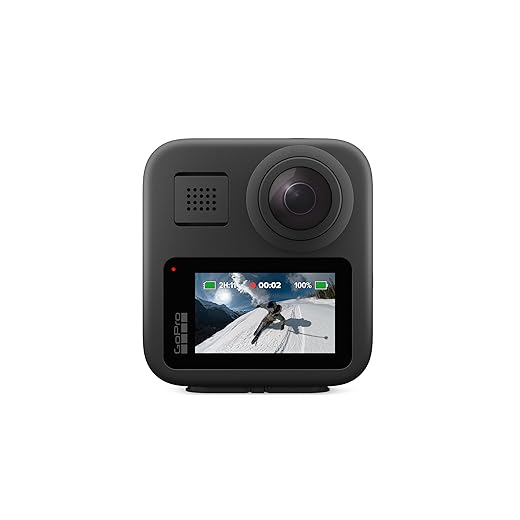
GoPro MAX vs Insta360 X5/X4: Which 360 Camera Is Right for You?
GoPro MAX vs Insta360 X5/X4: Insta360 wins for resolution, AI tools, and ease of use; GoPro MAX is only worth it if you’re already deep in the GoPro ecosystem.
The GoPro MAX records 5.6K 30fps 360 video with HyperSmooth stabilization, but it’s older, heavier, and less refined than Insta360’s current lineup. The Insta360 X5 records 8K 30fps 360 video with FlowState stabilization, invisible selfie-stick effect, and AI reframing tools that make editing far easier.
GoPro MAX vs Insta360 X5/X4: Specs Comparison Table
| Feature | GoPro MAX | Insta360 X5 | Insta360 X4 |
|---|---|---|---|
| Camera Type | 360-degree dual-lens action camera | 360-degree dual-lens camera (flagship) | 360-degree dual-lens camera (mid-range) |
| Sensor Size | Dual 1/2.3-inch sensors (one per lens) | Dual 1/2-inch sensors (one per lens) | Dual 1/2-inch sensors (one per lens) |
| Max 360 Video Resolution | 5.6K 30fps 360 video | 8K 30fps 360 video | 8K 30fps 360 video |
| Max Frame Rate (360) | 5.6K 30fps, 3K 60fps 360 | 8K 30fps, 5.7K 60fps 360 | 8K 30fps, 5.7K 60fps, 4K 100fps single-lens |
| Single-Lens Mode | Yes (1440p 60fps single-lens mode) | Yes (4K 100fps single-lens mode) | Yes (4K 100fps single-lens mode) |
| Stabilization System | HyperSmooth (360-optimized) | FlowState Stabilization + 360-degree HorizonSteady | FlowState Stabilization + 360-degree HorizonSteady |
| Waterproof Depth (no case) | 33ft / 10m | 33ft / 10m | 33ft / 10m |
| Screen Type | Dual screens (1.75-inch front status + 2-inch rear touchscreen) | 2.29-inch OLED touchscreen (single rear screen) | 2.5-inch OLED touchscreen (single large rear screen) |
| Low-Light Performance | Fair (older sensor tech, noticeable noise in low light) | Good (PureVideo low-light mode, improved sensors) | Good (PureVideo low-light mode, improved sensors) |
| Battery Life (real-world 360) | ~70 minutes (5.6K 30fps 360) | ~80 minutes (8K 30fps 360) | ~85 minutes (8K 30fps 360) |
| Fast Charging | USB-C charging (standard speed) | USB-C fast charging | USB-C fast charging |
| External Mic Support | Yes (via 3.5mm adapter in waterproof case) | Yes (via USB-C or 3.5mm adapter) | Yes (via USB-C or 3.5mm adapter) |
| Invisible Selfie Stick Effect | No (requires manual editing workarounds) | Yes (automatic in 360 mode) | Yes (automatic in 360 mode) |
| AI Editing Features | Max HyperSmooth, PowerPano panoramic video, TimeWarp 360 | AI Highlight Reels, Auto Reframe, Timeshift hyperlapse, Shot Lab templates, 360-to-traditional reframing | AI Highlight Reels, Auto Reframe, Timeshift hyperlapse, Shot Lab templates, 360-to-traditional reframing |
| Mounting Ecosystem | Extensive (full GoPro mount compatibility – helmet, chest, handlebar, surfboard, drone) | Growing (360-specific mounts, invisible selfie sticks, motorcycle/helmet kits, standard action mounts) | Growing (360-specific mounts, invisible selfie sticks, motorcycle/helmet kits, standard action mounts) |
| Price Tier (2026) | Mid-range (older model, often discounted) | Premium (latest flagship 360 camera) | Mid-range (best value 360 camera) |
| Best For | GoPro ecosystem users wanting 360 option, immersive 360 tours, VR/3D footage, 360 underwater use | 360 content creators, immersive travel videos, drone-like third-person shots, reframing flexibility, unique social media angles, VR/3D footage, professional freelance work | 360 content creators, budget-conscious 360 buyers, immersive travel videos, drone-like third-person shots, reframing flexibility, unique social media angles, beginners in 2026 |
The Insta360 X5 clearly outperforms the competition for 360 travel content, immersive tours, VR and 3D footage, and real estate 360 content. The X4 offers similar capabilities at a lower price point, making it a strong budget option for beginners. The GoPro MAX is only worth considering if you already own GoPro mounts and want a 360 option that fits your existing ecosystem.
Both are waterproof to 33ft/10m without a case, but Insta360’s app editing workflow, AI highlight reels, and reframing tools are significantly more polished.
GoPro vs Insta360 for Vlogging and YouTube
GoPro vs Insta360 for vlogging: Insta360 Ace Pro 2 wins for flip screen, AI editing, and audio; GoPro HERO13 wins for 5.3K resolution and mounting flexibility.
If you’re choosing between the GoPro HERO13 and the Insta360 Ace Pro 2 for vlogging, here’s what matters: the Ace Pro 2’s flip screen makes framing yourself easy, the Leica lens delivers better low-light footage, and the AI editing tools save hours in post. GoPro requires a Media Mod for a front screen and better audio, adding cost and bulk.
For YouTube, TikTok, and Instagram Reels, Insta360’s AI reframing, highlight reels, and direct microphone support give it a real advantage. The GoPro HERO13 is better if you’re mixing action footage with vlogs and already own GoPro accessories.
GoPro vs Insta360 for Mountain Biking and Motorcycling
GoPro vs Insta360 for mountain biking and motorcycling: GoPro HERO13/12 is better for helmet and chest mounts. The Insta360 X5 is better for creative 360 shots and reframing.
Mountain bikers and motorcyclists need secure mounting, strong stabilization, and the ability to handle vibrations and impacts. GoPro’s mounting ecosystem is unmatched, with purpose-built helmet mounts, chest harnesses, handlebar clamps, and adhesive mounts that have been tested for years in extreme conditions.
The GoPro HERO13’s HyperSmooth 6.0 with HorizonSteady keeps footage level even when the bike leans into corners or the motorcycle banks through turns. The camera’s rugged body and 33ft waterproofing also handle mud, rain, and crashes better. The Insta360 X5 can capture 360 footage from the same mounts, giving you reframing flexibility, but it’s bulkier and less proven for hard impacts.
For riders who prioritize traditional action footage and mounting reliability, GoPro is the smarter choice. For creators who want unique 360 angles and the invisible selfie-stick effect, the Insta360 X5 is worth the trade-off.
GoPro vs Insta360 for Skiing, Snowboarding, and Winter Sports
GoPro vs Insta360 for skiing and snowboarding: both work well, but GoPro HERO13/12 has better cold-weather battery options; Insta360 X5 has better 360 creative potential.
Both GoPro HERO13 and Insta360 X5 are rated for cold-weather operation, but GoPro’s Enduro batteries are specifically designed for sub-zero temperatures, maintaining capacity better than standard lithium-ion cells. For ski resorts, backcountry touring, and snowboarding in freezing conditions, GoPro’s battery ecosystem gives it a practical edge.
Stabilization is excellent on both: HyperSmooth 6.0 on GoPro and FlowState on Insta360 handle the vibrations of skiing and snowboarding well. The GoPro HERO13’s 5.3K 60fps captures more detail for slow-motion edits, while the Insta360 X5’s 8K 360 video lets you reframe shots after the fact for unique perspectives.
For helmet mounting, GoPro’s ecosystem is more mature, with purpose-built ski-helmet mounts and adhesive pads that stick reliably in cold conditions. Insta360’s mounts work well but may require additional adapters for certain helmets.
GoPro vs Insta360 for Surfing and Underwater
GoPro vs Insta360 for surfing and underwater: both are waterproof to 33ft/10m without a case; GoPro has more underwater accessories; Insta360 has better 360 potential.
For surfing, both cameras handle saltwater, waves, and impacts well, but GoPro’s mounting ecosystem offers more surfboard-specific mounts, leash attachments, and floating hand grips. The HERO13’s HyperSmooth stabilization also handles the chop and vibration of surfing slightly better than Insta360’s FlowState.
For scuba diving beyond 10m, both cameras require dedicated underwater housings. GoPro’s dive housings are more widely available and tested for deeper depths, while Insta360’s underwater accessories are newer but improving. Color accuracy underwater is strong on both, though GoPro’s color science tends to produce more vibrant blues and greens straight out of the camera.
For 360 underwater content, the Insta360 X5 offers unique immersive footage that GoPro MAX can’t match in resolution or editing flexibility.
GoPro vs Insta360 for Travel and Everyday Use
GoPro vs Insta360 for travel: Insta360 Ace Pro 2 and X5 are better for vlogging and 360 content; GoPro HERO13 is better for action shots and mounting flexibility.
Travelers who want to capture walking tours, city exploration, and solo vlogs will appreciate Insta360’s flip screen, AI editing, and 360 reframing. The Ace Pro 2’s Leica lens and low-light performance make it excellent for evening street scenes and indoor footage.
GoPro HERO13 excels for adventure travel: hiking, climbing, kayaking, and activities where mounting flexibility and ruggedness matter more than creative features. The extensive accessory ecosystem means you can mount the camera on backpacks, trekking poles, boats, and drones with ease. TimeWarp hyperlapse and Night Lapse modes are also more polished on GoPro for travel timelapses.
For family vacations, both brands work well. GoPro is better if you plan active outings; Insta360 is better if you want unique 360 memories and easier vlogging for daily highlights.
GoPro vs Insta360: Battery Life, Low Light, and Image Quality
GoPro vs Insta360 for battery life: roughly equal in real-world use. For low light: Insta360 Ace Pro 2 wins with a larger sensor. For image quality: GoPro wins for resolution; Insta360 wins for 360 flexibility.
Both GoPro HERO13 and Insta360 Ace Pro 2 manage around 90 minutes in high-resolution modes with real-world use. Insta360 X5’s 360 recording drains battery faster due to processing two lenses simultaneously.
Low-light performance favors Insta360 Ace Pro 2 due to its larger 1/1.3-inch Leica sensor compared to GoPro’s 1/1.9-inch sensor. For night riding, indoor events, and evening travel footage, Ace Pro 2 produces cleaner, less noisy video.
Image quality is more nuanced. GoPro HERO13’s 5.3K 60fps captures more detail for cropping and slow motion, while Insta360 X5’s 8K 360 video offers reframing flexibility. Color science differs: GoPro tends toward vibrant, punchy colors; Insta360 leans more neutral and cinematic. Both support 10-bit color and HDR video for grading flexibility.
GoPro vs Insta360: Mounting Ecosystem and Accessories
GoPro vs Insta360 for mounting ecosystem: GoPro wins by a wide margin.
GoPro has over a decade of accessory development, with thousands of third-party mounts, housings, grips, and adapters. The Media Mod, Light Mod, and Volta grip create a complete vlogging and production ecosystem. Insta360’s mounting system is newer and less comprehensive, though improving with each generation.
For helmet cams, chest mounts, handlebars, surfboards, and drones, GoPro’s mounting options are more purpose-built and tested. Insta360’s mounts work well for 360 capture but may require additional adapters for certain helmets and surfaces. For professional freelancers and content creators who rely on specific mounts, GoPro’s ecosystem is more reliable.
GoPro vs Insta360: Price, Value, and Deals in 2026
GoPro vs Insta360 for price and value: Insta360 offers better value for 360 and vlogging; GoPro is worth it for extreme sports and mounting needs.
The GoPro HERO13 Black typically retails at a premium price, while the Insta360 Ace Pro 2 and X5 offer competitive pricing with more features included (flip screen, Leica lens, AI editing). GoPro requires a subscription for full feature access (cloud storage, preset edits, accessory discounts), while Insta360 has no subscription requirement.
For Black Friday 2026, expect deeper discounts on GoPro HERO12 and Insta360 X4 bundles. GoPro often bundles extra batteries, mounts, or subscription trials; Insta360 bundles additional batteries, invisible selfie sticks, or 360 editing software. Used GoPro HERO11/10 cameras offer excellent value for budget buyers, while used Insta360 X3 remains a solid mid-range 360 option.
FAQs: GoPro vs Insta360
GoPro vs Insta360: which is better overall in 2026?
Insta360 is better for 360 content, vlogging, and AI editing; GoPro is better for extreme sports, mounting options, and traditional action footage.
Which is better for vlogging: GoPro HERO13 or Insta360 Ace Pro 2?
Insta360 Ace Pro 2 is better for vlogging due to flip screen, Leica lens, AI editing, and direct microphone support without needing extra mods.
Which has better low-light performance: GoPro HERO13 or Insta360 Ace Pro 2?
Insta360 Ace Pro 2 has better low-light performance thanks to its larger 1/1.3-inch Leica sensor.
Which is better for mountain biking: GoPro HERO13 or Insta360 X5?
GoPro HERO13 is better for mountain biking due to its more mature mounting ecosystem, rugged body, and HyperSmooth 6.0 stabilization for high-impact action.
Which is better for underwater use: GoPro HERO13 or Insta360 X5?
Both are waterproof to 33ft/10m without a case. GoPro has more underwater accessories; Insta360 X5 offers unique 360 underwater footage.
GoPro MAX vs Insta360 X5: which 360 camera should you buy?
Insta360 X5 is better for 8K 30fps 360 video, AI reframing, and editing tools. GoPro MAX is only worth it if you’re already deep in the GoPro ecosystem.
Which has better battery life: GoPro HERO13 or Insta360 Ace Pro 2?
In real-world use, both cameras have roughly equal battery life, lasting about 90 minutes in high-res modes. Insta360 X5 drains faster due to 360 processing.
GoPro vs Insta360: which ecosystem and accessories are better?
GoPro has a far more mature and extensive accessory ecosystem, with thousands of mounts, housings, and production accessories. Insta360’s system is newer but improving.


