
Best 360 Cameras 2026: Top 12 Ranked for Vlogging, Travel, Real Estate, VR, Action Sports & Underwater

What are the best 360 cameras in 2026? Currently, the Insta360 X6 and DJI Osmo 360 II lead the flagship tier with genuine 8K 360 video and usable low-light performance, while the Insta360 X5 remains the smart all-rounder for creators who don’t need the newest chip. If you’re comparing across the broader Best Action Cameras list, these three sit near the top for immersive capture, though traditional single-lens options still win for pure resolution and mounting simplicity. Choosing between them depends on whether you prioritize raw image quality, hardware durability, or price, since the gap has narrowed significantly compared to previous generations.
For budget-conscious buyers, the Insta360 X4 Air and X3 deliver excellent 360 footage without draining your savings, and both remain genuinely capable rather than compromised picks. The X4 Air is my top recommendation for first-timers thanks to its light body and approachable price, while the X3 frequently drops below $300 during sales and still looks fantastic on social platforms. Within the Best Insta360 Cameras lineup, these two represent the best value for travelers, family documentarians, and casual creators testing whether 360 fits their workflow before committing to flagship pricing.
Specialists like the Ricoh Theta X and Kandao QooCam 3 Ultra cover real estate and color-graded work better than any generalist camera could, precisely because they weren’t designed to do everything at once. The Theta X excels at interior HDR stills for listings, while the QooCam 3 Ultra leans into 10-bit HLG video for cinematic grading flexibility. If your work revolves around one of these narrower use cases, a generalist action camera will almost always underperform compared to a tool designed around your actual workflow, regardless of where it ranks on a wider Best Action Cameras list.
Action sports shooters face a different decision entirely, often coming down to existing gear rather than pure image quality. The GoPro Max 2 makes the most sense if you’re already invested in GoPro’s mounting ecosystem, while the Insta360 X5 offers sharper footage and better low-light handling for mountain biking, skiing, or motorcycling. Within the Best GoPro Cameras and Best DJI Action Cameras categories, the Max 2 and Osmo 360 II, respectively, serve users who prioritize ecosystem compatibility and hardware durability. This guide breaks down twelve 360 cameras I’ve actually used across trails, slopes, dive sites, and real estate shoots so you can match the right model to your budget and shooting habits.
Best 360 Cameras in 2026

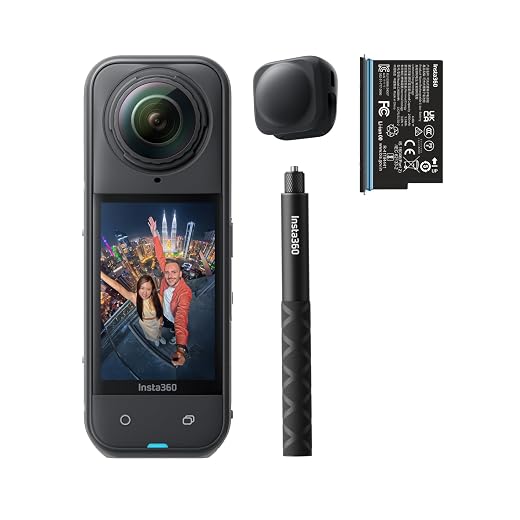
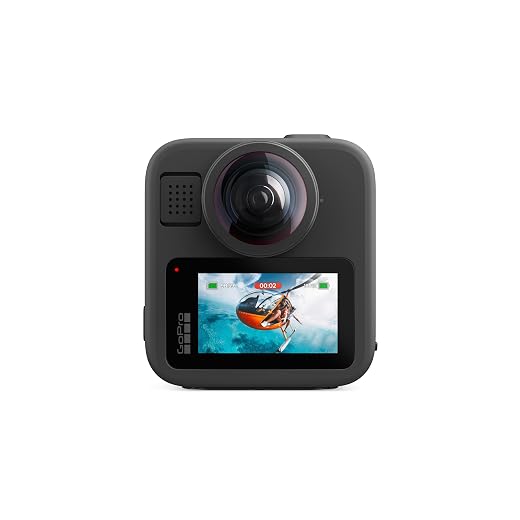
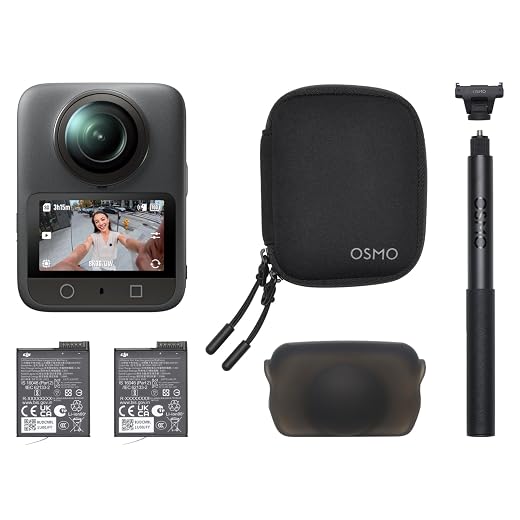


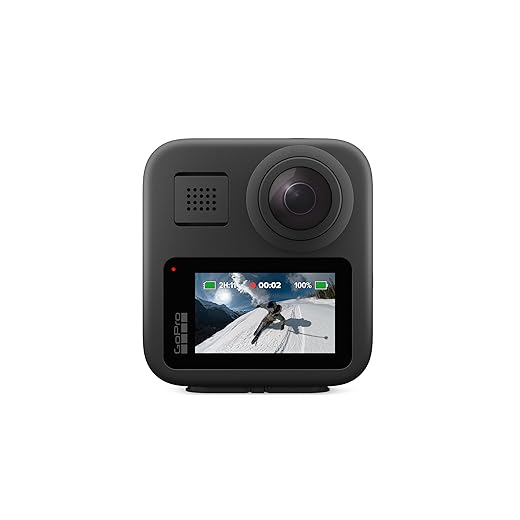


1. Insta360 X6 – Why Buy: Best overall 360 camera for 8K50 video, Dolby Vision, 120MP photos, and 47GB built-in storage
Insta360 X6 Essentials Bundle
The Insta360 X6 is Insta360’s most ambitious 360 camera to date, built around dual custom Sony 1/1.1-inch square sensors that finally push 360 image quality into territory that feels genuinely close to a dedicated single-lens camera. This is the camera I’d point toward if you’re serious about 360 travel content and reframing shots into normal-feeling video after the fact, because the extra sensor size actually shows up in the footage rather than just the spec sheet.
What stands out most in real-world use is the low-light performance. Shooting at dusk or indoors without extra lighting used to mean accepting grainy, muddy 360 footage, but the X6’s PureVideo mode handles dim scenes with noticeably less noise than the X5 before it. The addition of in-camera Dolby Vision processing is also a genuine first for the category, and it makes footage feel richer straight out of the camera rather than requiring heavy color work afterward.
Battery life sits at around 140 minutes when shooting at full 8K, which is shorter than the X5’s runtime but understandable given the extra processing happening on-chip. The 47GB of built-in storage is a nice touch for anyone who tends to forget spare memory cards, and the fast 24-minute charge time means you’re rarely stuck waiting around between shoots.
This camera makes the most sense for content creators, professional freelancers, and anyone producing 360 content where every bit of extra sharpness pays off in the final product. Casual users and beginners will likely find the price harder to justify given how impressive the X5 already is for a lower cost.
Pros:
- Best-in-class low-light 360 performance thanks to larger square sensors
- First 360 camera with in-camera Dolby Vision processing
- Strong AI highlight reel and reframing tools in the companion app
- 47GB built-in storage plus fast 24-minute charging
- Sharpest overall 8K 360 image quality currently available
Cons:
- Premium price puts it out of reach for casual buyers
- Shorter battery runtime than the X5 at full resolution
- App can feel sluggish when processing very large 8K files
- Marginal real-world gains over the X5 for daylight-only shooters
DJI Osmo 360 II
DJI’s Osmo 360 II arrives as a genuine alternative to Insta360’s dominance, built around dual 1/1.1-inch square HDR sensors and a standout feature nobody else offers: replaceable lenses. If you’ve ever cracked a 360 camera’s front element on a rock or a doorframe, you’ll understand immediately why this feature matters, since a snapped-on replacement costs far less and takes far less time than sending a whole camera in for repair.
Beyond durability, the Osmo 360 II impresses with its dynamic range, rated at 14.5 stops, which is a meaningful jump over its predecessor and noticeably better than most competing flagships when shooting scenes with bright skies and dark foregrounds. The f/1.9 lenses paired with an ISO range up to 51,200 give it real flexibility for night shooting, and the native 8K 60fps recording is currently unmatched for smoothness at that resolution.
Where it falls slightly behind Insta360’s ecosystem is app polish. DJI’s editing tools are capable but haven’t reached the same level of refinement or speed as Insta360’s mobile workflow, which matters if you’re trying to turn around content quickly for social platforms. The stabilization, built on DJI’s RockSteady 3.0 plus HorizonSteady combination, performs excellently for most action use but hasn’t been tested across as many extreme sports scenarios as GoPro’s tuning.
This camera is the right call for anyone who values hardware durability and dynamic range over app convenience, particularly DJI ecosystem users who already own drones or gimbals and appreciate a unified brand experience.
Pros:
- Replaceable lenses reduce repair costs and downtime after damage
- Class-leading 14.5 stops of dynamic range
- Native 8K 60fps video, currently unmatched at that combination
- Generous 128GB built-in storage (105GB usable)
- Strong stabilization for most everyday and action scenarios
Cons:
- App editing workflow lags behind Insta360’s polish and speed
- Not available in the US market at launch
- Higher learning curve for lens-swapping mechanism
- Ecosystem still developing compared to Insta360’s mature accessory lineup
Insta360 X5
Insta360 X5 Starter Bundle
The Insta360 X5 remains one of the smartest 360 camera purchases you can make in 2026, even with the X6 now sitting above it in the lineup. This is the camera I recommend most often to friends asking where to start with 360 travel and reframing, as it balances sharp 8K 30fps footage, dependable FlowState stabilization, and genuinely long battery life without pushing into flagship pricing territory.
What makes the X5 stick around as a top pick isn’t just the specs; it’s how forgiving the camera is in real shooting situations. The invisible selfie stick effect still looks genuinely impressive to people seeing it for the first time, and the PureVideo low-light mode handles evening walks and indoor scenes far better than you’d expect from a camera in this price bracket. Battery life stretches up to 208 minutes at full resolution, which is actually longer than the newer X6 manages, making it the better pick for long shooting days like festivals or full-day hikes.
The mounting ecosystem has matured significantly too, with helmet kits, chest mounts, and motorcycle-specific accessories now widely available, closing much of the gap that used to favor GoPro for action sports use. Waterproofing to 49ft without a case also means you can bring it snorkeling or into light surf without extra gear.
If your budget doesn’t stretch to the X6 or the Osmo 360 II, the X5 gives you nearly all the creative flexibility of the flagship tier at a noticeably friendlier price.
Pros:
- Excellent 8K 30fps image quality for the price
- Longest battery runtime among current flagship 360 cameras
- Mature mounting ecosystem covering most action sports needs
- 49ft waterproofing without a case
- Fast, polished app editing and AI reframing tools
Cons:
- Slightly softer low-light detail than the newer X6
- Lacks Dolby Vision support found in the X6
- Single rear screen only, no front display for framing yourself
- Standard sensors rather than the X6’s larger square design
GoPro Max 2
GoPro MAX2 – Waterproof 360
The GoPro Max 2 exists for one specific group of people: creators already deep into the GoPro mounting ecosystem who want a genuine 360 option without abandoning years of accumulated gear. If that describes you, this camera slots in seamlessly, offering true 8K30 360 video paired with HyperSmooth and Horizon Lock stabilization tuned specifically for the kind of jarring, high-vibration motion that comes with mountain biking, motocross, and other extreme sports.
The rugged waterproof body feels every bit as tank-like as GoPro’s traditional action cameras, and that durability matters more than people realize once you’re strapping a camera to a helmet for a full day of riding. Mount compatibility is the standout feature here; every clip, harness, and adhesive base from GoPro’s massive accessory catalog works without modification, which saves real money compared to building a new mounting setup from scratch.
Where the Max 2 loses ground is against Insta360’s current lineup on pure image quality, particularly in low light, where the X5 and X6 both pull ahead noticeably. The app experience, while functional, doesn’t match Insta360’s speed or the depth of AI editing tools currently available on competing platforms.
Buy this camera only if you’re committed to the GoPro ecosystem; it is not the objectively sharpest 360 camera on the market right now.
Pros:
- Seamless compatibility with existing GoPro mounts and accessories
- Stabilization tuned specifically for high-impact action sports
- Rugged, genuinely durable waterproof body
- True native 8K30 360 video recording
- Familiar interface for existing GoPro users
Cons:
- Falls behind Insta360’s current lineup in low-light image quality
- App editing tools lag behind competitors in speed and polish
- Premium price without a corresponding image quality advantage
- Battery life shorter than comparable Insta360 flagships
DJI Osmo 360
DJI Osmo 360 Essential Combo
The original DJI Osmo 360 introduced the brand’s now-signature dual 1/1.1-inch square sensors to the 360 category, and it remains a genuinely strong option for anyone already invested in DJI’s broader ecosystem of drones and gimbals. Native 8K50 video paired with 120MP still photos gave it flagship-level specs at launch, and the 10-bit D-Log M color profile appealed directly to editors wanting more grading flexibility than typical consumer 360 footage allows.
Where this camera shines is integration. If you’re already flying a DJI drone or shooting with an Osmo gimbal, the shared app ecosystem and consistent color science across devices make workflow noticeably smoother than mixing brands. That consistency matters more than people expect once you’re editing footage from multiple sources into a single project.
Compared to the newer Osmo 360 II, this original model lacks replaceable lenses and tops out at 8K50 rather than 8K60, and its dynamic range doesn’t quite reach the 14.5-stop figure DJI achieved with the sequel. Still, for anyone who can find it discounted now that the II has launched, it represents strong value for buyers who don’t need the absolute newest hardware.
DJI ecosystem loyalists and anyone prioritizing color grading flexibility over having the newest possible spec sheet will still get plenty of use out of this camera in 2026.
Pros:
- Strong integration with existing DJI drone and gimbal workflows
- 10-bit D-Log M color for flexible post-production grading
- Native 8K50 video and 120MP stills at launch-competitive specs
- Large square sensors deliver solid overall image quality
- Frequently discounted now that the Osmo 360 II has launched
Cons:
- No replaceable lens option unlike its successor
- Lower dynamic range than the newer Osmo 360 II
- App ecosystem still trails Insta360 in editing speed and polish
- Tops out at 8K50 rather than the newer 8K60 standard
Insta360 X4
Insta360 X4 Standard Bundle
The Insta360 X4 continues to earn its reputation as the best value 8K 360 camera on the market, offering genuinely impressive 8K30 footage and smooth 5.7K60 recording at a price point that is noticeably lower than the X5. For anyone who wants sharp, shareable 360 content without paying flagship prices, the X4 remains one of the smartest purchases in the entire category, even a couple of years after its original release.
FlowState stabilization keeps footage steady across most everyday and light action scenarios, and the larger 2.5-inch touchscreen makes framing shots and reviewing footage in the field noticeably easier than on smaller competing displays. Battery life sits comfortably around 85 minutes at full resolution, which covers most day trips and casual shooting sessions without needing a spare battery on hand.
Where the X4 shows its age slightly is in low-light performance, where the newer PureVideo processing in the X5 and X6 pulls noticeably ahead. If most of your shooting happens during the day or in well-lit environments, this limitation rarely becomes a real problem, but dedicated night shooters or event videographers will feel the difference.
This camera makes the most sense for travelers, family vacation documentation, and content creators who want strong 8K quality without stretching their budget toward flagship territory.
Pros:
- Excellent value for genuine 8K30 360 video
- Large, easy-to-use 2.5-inch touchscreen
- Reliable FlowState stabilization for everyday shooting
- Solid battery life for full-day outings
- Mature, well-supported app ecosystem
Cons:
- Noticeably weaker low-light performance than newer models
- Bulkier and heavier than the newer X4 Air
- No replaceable lens option
- Starting to show its age against 2025-2026 flagship releases
Insta360 X3
Insta360 X3 Get-Set Bundle
The Insta360 X3 has aged remarkably well and remains a genuinely capable budget flagship 360 camera for anyone comfortable buying a model that’s now a couple of generations behind the current lineup. Shooting 5.7K30 video and 72MP stills, it still produces footage that looks excellent on social platforms, and frequent discounts often push it below $300, making it one of the best entry points into 360 content creation available anywhere right now.
What keeps the X3 relevant isn’t raw specs; it’s how mature and stable the surrounding app ecosystem has become. Years of updates mean the editing workflow feels polished rather than experimental, and features like the invisible selfie stick effect and basic AI reframing work reliably without the occasional rough edges you sometimes find in brand-new hardware releases.
Naturally, it can’t compete with newer cameras on low-light performance, dynamic range, or maximum resolution, and its battery life falls short of what the X4 and X5 offer for longer shooting sessions. The X3 remains an easy recommendation for beginners testing whether 360 content creation fits their workflow and for budget-conscious buyers who want to avoid spending a large amount of money upfront.
Pros:
- Frequently available under $300, excellent budget entry point
- Mature, stable app ecosystem after years of software updates
- Solid 5.7K video and 72MP photos for social content
- Reliable invisible selfie stick and basic reframing tools
- Compact and comfortable for everyday carry
Cons:
- Noticeably behind newer models in low-light performance
- Shorter battery life than the X4 and X5
- Lower maximum resolution than current flagship options
- Lacks the dynamic range improvements found in newer sensors
Kandao QooCam 3 Ultra
KanDao QooCam 3 Ultra 360 Action Camera
The Kandao QooCam 3 Ultra occupies a specific niche most other 360 cameras don’t chase: serious color grading flexibility for creators who treat 360 footage as raw material for cinematic post-production rather than a finished product straight out of camera. With 10-bit HLG video, 96MP RAW photo capture, and fast f/1.6 lenses across dual 1/1.7-inch sensors, it’s built for people who want maximum control in the edit rather than convenience straight off the camera.
This focus on grading flexibility shows up clearly in low-light and mixed-lighting scenarios, where the fast lenses and larger sensors pull in noticeably more usable detail than typical consumer-grade 360 cameras. Professional freelancers producing branded content, real estate video tours, or short films built around immersive footage will appreciate having genuine RAW options rather than being locked into baked-in color processing.
The trade-off is accessibility. This isn’t a camera you pick up, shoot, and post to social media within minutes; it rewards people who already have an editing workflow built around color grading and don’t mind spending extra time in post to get footage looking the way they want. Casual users and beginners will likely find Insta360’s more automated approach faster and less frustrating for everyday content.
If cinematic control matters more to you than instant shareability, the QooCam 3 Ultra earns its place as a specialized, genuinely excellent tool.
Pros:
- 10-bit HLG video and 96MP RAW photos for maximum editing flexibility
- Fast f/1.6 lenses improve low-light and mixed-lighting performance
- Strong dynamic range for color grading workflows
- Appeals directly to professional freelancers and cinematic creators
- Larger sensors than many competing budget-tier 360 cameras
Cons:
- Steeper learning curve than automated competitors
- Not ideal for creators wanting instant, ready-to-post footage
- Smaller accessory ecosystem than Insta360 or GoPro
- Pricing sits above typical consumer expectations for the category
Ricoh Theta X
Ricoh Theta X 360-Degree Camera Bundle
The Ricoh Theta X was built with one job in mind, and it still does that job better than almost any generalist 360 camera on this list: capturing clean, accurately exposed interior stills for real estate listings and virtual tours. Its 60.5MP HDR photo mode handles the classic real estate lighting problem, bright windows against dim interiors, with noticeably less blown-out highlight detail than typical consumer 360 cameras manage.
The 2.25-inch touchscreen makes framing shots simple even in tight interior spaces, and the auto-HDR processing means agents and photographers don’t need to manually bracket exposures the way older 360 cameras often required. While it does shoot 5.7K30 video, that’s clearly a secondary feature; this camera’s real strength lives in its still photography pipeline, not its video capabilities.
Because it’s designed around tripod-based interior shooting rather than action use, don’t expect the rugged waterproofing or aggressive stabilization found in cameras like the GoPro Max 2 or Insta360 X5. That’s fine, because nobody buying a Theta X is planning to strap it to a mountain bike.
Real estate photographers, interior designers documenting projects, and anyone regularly shooting Google Street View-style interior content will get more consistent, professional-looking results from the Theta X than from any action-oriented 360 camera trying to double as a real estate tool.
Pros:
- Exceptional 60.5MP HDR stills for interior real estate photography
- Auto-HDR processing simplifies tricky window-light scenes
- Easy-to-use 2.25-inch touchscreen for tight interior framing
- Compact, tripod-friendly design for professional shoots
- Reliable, consistent color for listing platforms
Cons:
- Video capabilities are secondary and unremarkable
- Not built for action sports or rugged outdoor use
- Lacks advanced stabilization found in newer competitors
- Aging hardware compared to 2025-2026 flagship releases
GoPro MAX
GoPro MAX — Waterproof 360 + Traditional Action Camera with Touch Screen
The original GoPro MAX deserves credit as the camera that first proved GoPro could compete seriously in the 360 category, but in 2026, it only makes sense as a budget or secondhand purchase rather than a primary recommendation. Shooting 5.6K30 360 video with early HyperSmooth stabilization, it was genuinely impressive at launch, and it still holds up reasonably well for casual, low-stakes shooting.
What still works in its favor is the mounting compatibility. Every accessory in GoPro’s enormous catalog fits the MAX just as easily as it fits newer cameras, which matters if you’re picking one up secondhand specifically to pair with existing GoPro gear you already own. Dual screens also remain genuinely useful for framing shots without pulling out a phone.
Where it clearly falls behind is everything related to image quality. Low-light performance is noticeably weaker than any 2024-2026 release, resolution tops out well below current flagship standards, and battery efficiency doesn’t compare favorably to newer sensor and chip designs. This isn’t a camera worth buying new in 2026 under any circumstances.
The MAX still serves a purpose for budget-conscious buyers who find a used one at a genuinely low price and want to experiment with 360 shooting before committing to something newer. Everyone else should look toward the X3, X4, or X4 Air instead.
Pros:
- Full compatibility with GoPro’s extensive mounting ecosystem
- Dual screens for easy framing without a phone
- Rugged, durable waterproof design
- Frequently available at low secondhand prices
- Simple, familiar interface for existing GoPro users
Cons:
- Significantly weaker low-light performance than current models
- Lower resolution ceiling compared to 2024-2026 releases
- Shorter battery life relative to newer sensor designs
- No longer receiving meaningful software feature updates
Insta360 ONE RS 1-Inch 360 Edition
Insta360 ONE RS 4K Edition – Waterproof 4K
The Insta360 ONE RS 1-Inch 360 Edition remains a genuinely underrated pick for anyone who prioritizes low-light performance and cinematic color above nearly everything else, thanks to its dual 1-inch Leica-tuned sensors, which are physically larger than what you’ll find in the X4 or even the newer X5. Larger sensors mean more light captured per pixel, and that advantage shows up clearly the moment you shoot indoors, at dusk, or anywhere without strong ambient lighting.
The modular design, borrowed from Insta360’s action camera lineup, lets you swap between different lens modules depending on the shoot, which appeals to creators who want flexibility beyond pure 360 capture. Color output leans noticeably more cinematic than typical 360 footage, likely thanks to the Leica collaboration on lens tuning, giving footage a richer, less flat look straight out of camera.
The trade-offs are real, though. Battery life falls short of newer, more efficient cameras, and the modular body adds bulk compared to the sleek, single-piece designs of the X4 and X5. The app ecosystem hasn’t received the same steady stream of updates as Insta360’s current mainline products either, meaning some newer features simply aren’t available here.
Filmmakers, event videographers, and anyone shooting frequently in challenging light should still seek this camera out, particularly at discounted prices, because the sensor advantage genuinely outweighs the convenience gap for the right use case.
Pros:
- Larger 1-inch sensors deliver superior low-light performance
- Cinematic, Leica-tuned color science
- Modular design allows lens flexibility beyond 360 capture
- Strong dynamic range compared to smaller-sensor competitors
- Appeals directly to filmmakers and event videographers
Cons:
- Shorter battery life than newer, more efficient cameras
- Bulkier modular design compared to single-piece competitors
- App hasn’t received the same update frequency as current models
- Missing newer AI editing features found in the X5 and X6
Insta360 X4 Air
Insta360 X4 Air Road Cycling Bundle
The Insta360 X4 Air is the lightweight beginner 360 camera I recommend most often to people asking where to start, weighing just 165 grams and priced around $399, which removes a lot of the hesitation that comes with trying an unfamiliar camera format for the first time. Despite the smaller, lighter body, it still shoots genuine 8K30 360 video, so you’re not sacrificing meaningful image quality just to save weight and money.
The 1/1.8-inch sensors sit between the X3 and full-size X4 in overall capability, striking a reasonable balance for casual shooters who want solid daytime footage without needing professional-grade low-light performance. Replaceable lenses are a genuinely welcome addition here too, since beginners are statistically more likely to scratch or crack a lens while learning how to handle a new camera format.
Where it makes the most sense is everyday carry, casual travel content, and family vacation highlights, situations where a smaller, lighter camera actually gets used more often than a bulkier flagship left sitting in a bag. Solo travelers backpacking through multiple destinations will particularly appreciate the reduced weight over a multi-week trip.
If you’re new to 360 content creation and unsure whether it’ll become a regular habit, the X4 Air removes both the financial and physical weight barriers that often stop people from trying.
Pros:
- Lightweight 165-gram body ideal for travel and everyday carry
- Genuine 8K30 360 video despite the smaller size
- Replaceable lenses reduce repair costs for beginners
- Approachable $399 price point
- Solid daytime image quality for casual content
Cons:
- 1/1.8-inch sensors underperform in low light compared to X4 and X5
- Smaller battery than full-size siblings
- Fewer advanced features than the mainline X4 or X5
- Screen size trimmed down compared to the standard X4
Best 360 camera deals and Black Friday 2026: what to expect
Expect the deepest discounts on the Insta360 X4, X3, and the original GoPro MAX during Black Friday and Cyber Monday 2026, since retailers typically clear out previous-generation stock once flagship models like the X6 and Osmo 360 II have settled into the market. Bundled deals often include extra batteries, invisible selfie sticks, or discounted underwater housings rather than straight price cuts on the newest flagship cameras.
Budget-conscious buyers should watch for the X3 dropping toward or below $250 and the X4 Air seeing modest discounts around $50-$75 off its regular price. Flagship models rarely see steep discounts in their first holiday season, so anyone wanting the X6 or Osmo 360 II at a lower price should expect to wait until the following year’s sales cycle once a true successor arrives.
Best 360 camera for vlogging and YouTube
The best 360 camera for vlogging right now is the Insta360 X6, thanks to its larger sensors, sharper low-light footage, and AI reframing that turns raw spherical capture into a normal-looking vlog clip without you touching a tripod. The Insta360 X5 is the smarter buy if you want nearly the same vlogging experience for less money, and the X4 Air works well for beginners who just want a lightweight 360 camera for YouTube content.
For vlogging, what matters most is how easily the footage becomes a finished video without hours of manual reframing. Insta360’s app has spent years refining that workflow, and it still beats the Osmo 360 II’s editing tools for speed, even though DJI’s hardware is arguably sharper in certain lighting conditions.
- Best overall for YouTube 360 content: Insta360 X6
- Best value for creators starting out: Insta360 X5
- Best ultra-light option for travel vlogs: Insta360 X4 Air
Best 360 camera for travel and everyday use
For travel, the Insta360 X5 remains the camera I’d actually recommend to a friend heading off on a backpacking trip or city break. It’s compact, the battery lasts through a full day of casual shooting, and the invisible selfie stick effect means you get third-person, drone-like shots without carrying a drone.
Travel photography and video have different needs than studio work: you want something pocketable, weatherproof, and forgiving when you’re rushing to catch a shot before a train leaves. The X4 Air shaves off weight for ultralight travelers, while the X6 makes sense if you’re a professional freelancer documenting trips for paid content and need every bit of extra sharpness.
Everyday carry favors smaller, simpler cameras. The X4 Air and X3 both fit that role nicely, letting you capture spontaneous 360 moments without lugging a bigger rig everywhere you go.
Best 360 camera for real estate and virtual tours
The Ricoh Theta X is the strongest choice for real estate virtual tours because of its 60.5MP HDR stills and dedicated interior shooting mode, while the Kandao QooCam 3 Ultra is better if you also need color-graded video walkthroughs for high-end listings. Neither camera prioritizes action-camera toughness, and that’s fine, because real estate work happens indoors, on tripods, without impact or water exposure.
Real estate photographers care about accurate HDR exposure, minimal stitching artifacts, and rapid export to virtual tour platforms. The Theta X’s auto-HDR mode handles tricky window light in a living room far better than a generalist action-style 360 camera. For agents who also want cinematic video tours alongside stills, the QooCam 3 Ultra’s 10-bit HLG output gives editors more room to grade footage for a polished, professional look.
- Best for interior stills and HDR photos: Ricoh Theta X
- Best for color-graded video walkthroughs: Kandao QooCam 3 Ultra
- Best budget option for casual listings: Insta360 X3
Best 360 camera for VR, spatial computing, and 3D footage
The Insta360 X6 and DJI Osmo 360 II are currently the best 360 cameras for VR and spatial computing content, since both support high-resolution capture that holds up when viewed through headsets like the Meta Quest or Apple Vision Pro. Spatial video demands more detail than a phone screen ever will reveal, and lower-resolution 360 cameras start looking soft the moment you strap on a headset.
For VR and 3D footage, resolution and sensor size matter more than almost any other spec. The X6’s larger square sensors and native high frame rate capture hold detail well when reprojected into a headset, and the Osmo 360 II’s dynamic range means bright outdoor scenes don’t blow out when viewed up close in VR. The older GoPro MAX and even the X4 can technically shoot for VR, but the difference in headset clarity is noticeable enough that I wouldn’t recommend either for serious spatial computing work in 2026.
Best 360 camera for action sports (mountain biking, motorcycling, skiing, surfing)
For mountain biking, motorcycling, skiing, and surfing, the GoPro Max 2 and Insta360 X5 are the two cameras worth considering, and the right pick depends on whether you’re already invested in GoPro’s mounting ecosystem. GoPro Max 2 wins on rugged mounting compatibility and stabilization tuned specifically for high-vibration sports, while the X5 offers sharper 360 footage and better low-light performance for night rides or overcast ski days.
Action sports put unique stress on a camera: constant vibration, sudden impacts, and unpredictable lighting as you move between tree cover and open sky. GoPro’s stabilization has been refined around exactly these conditions for over a decade, and the Max 2 inherits that tuning. Insta360’s Flow State stabilization has closed the gap significantly, though, and the X5’s sharper sensors make a real difference when you’re skiing through flat, overcast light where detail tends to disappear.
Riders who already own GoPro helmet mounts, chest harnesses, and handlebar clamps should lean toward the Max 2 simply because everything already fits. Everyone else building a mounting setup from scratch will find the X5’s accessory lineup catching up fast, plus better creative flexibility once you’re back home editing.
Best 360 camera for underwater and scuba diving
Both the Insta360 X5 and GoPro Max 2 handle underwater shooting to 33ft/10m without a case, but for scuba diving beyond that depth, you’ll need a dedicated housing for either camera, and the Insta360 X5 currently has the edge in color accuracy underwater. Surfers who want housing-free shooting can use either camera confidently in shallow water and light surf conditions.
Underwater 360 footage is unforgiving when it comes to color casts, and saltwater tends to shift blues and greens in ways that are difficult to correct afterward. The X5’s PureVideo mode helps preserve more usable detail in murky or low-light dive conditions compared to the aging sensor in the original GoPro MAX, which struggles noticeably once you’re more than a few meters down.
Snorkelers and casual swimmers can get away with either camera without a housing, since both are rated for the same shallow depth. Serious divers heading past recreational depth limits need to budget for a proper housing regardless of which brand they choose.
Insta360 X6 vs DJI Osmo 360 II vs Insta360 X5: which flagship 360 should you buy?
If you want the sharpest, most future-proof 360 camera available right now, buy the Insta360 X6. If replaceable lenses and slightly better dynamic range matter more to you than ecosystem familiarity, the DJI Osmo 360 II is worth serious consideration. For those who want to save money while still achieving excellent results, the Insta360 X5 is a smart purchase in 2026.
These three cameras represent the current top tier of 360 capture, and the differences between them are smaller than the marketing suggests. The X6’s dual custom Sony square sensors produce noticeably better low-light detail than the X5, and its Dolby Vision support is a genuine first for the category. The Osmo 360 II counters with slightly higher dynamic range and a swappable lens design that means a cracked front element doesn’t require sending the whole camera in for repair.
Here’s how they stack up on the details that actually change a buying decision:
- Sharpest 8K footage overall: Insta360 X6
- Best dynamic range and replaceable lenses: DJI Osmo 360 II
- Best price-to-performance ratio: Insta360 X5
- Longest battery runtime at 8K: Insta360 X5 (up to 208 minutes) versus X6’s 140 minutes
- Best app ecosystem and editing speed: Insta360 X6 and X5 tie, both ahead of DJI’s app
Choosing between the X6 and Osmo 360 II mostly comes down to whether you already trust Insta360’s editing app or you’re drawn to DJI’s swappable lens design for long-term durability. Choosing the X5 over either simply comes down to budget, since the image quality gap is smaller than a full generation jump would suggest.
GoPro Max 2 vs Insta360 X5 vs GoPro MAX: ecosystem and stabilization compared
GoPro Max 2 is the better choice if you already own GoPro mounts and want native 8K 360 video with stabilization tuned for extreme motion, while the Insta360 X5 offers sharper image quality and a more polished editing workflow for creators without existing GoPro gear. The original GoPro MAX from 2020 is only worth considering today as a secondhand budget pick, since its older sensor falls behind in nearly every measurable way.
GoPro’s stabilization system, refined over generations of extreme sports footage, still gives the Max 2 an edge in chaotic, high-vibration situations like downhill mountain biking or motocross. Insta360’s FlowState has narrowed that gap considerably, and the X5 pulls ahead in scenarios involving low light or scenes requiring heavy post-production reframing.
The GoPro MAX from 2020 simply can’t compete with newer sensors on resolution, low-light clarity, or battery efficiency. It still makes sense as an inexpensive way to try 360 shooting for the first time, particularly if you find one secondhand at a steep discount, but expect noticeably softer detail compared to anything released after 2024.
Kandao QooCam 3 Ultra vs Ricoh Theta X: color grading and real estate stills
The Kandao QooCam 3 Ultra wins for anyone who wants cinematic color grading flexibility in their 360 footage, while the Ricoh Theta X remains the sharper tool specifically for real estate stills and interior HDR photography. These two cameras rarely compete directly because they’re built for different workflows within the same broad “360 camera” category.
QooCam 3 Ultra’s 10-bit HLG output and exceptionally bright f/1.6 lenses give video editors far more latitude in post-production than Theta X’s video capabilities can match. If you’re producing branded real estate video tours meant to look polished and cinematic rather than purely functional, the QooCam pulls ahead.
Theta X, on the other hand, was built around still photography workflows for property listings, and its 60.5MP HDR mode captures interior spaces with more consistent exposure than any general-purpose 360 camera in this list. Real estate photographers who mainly need fast, accurate stills for listing platforms will get more mileage from the Theta X’s dedicated HDR processing than from Kandao’s video-focused hardware.
Insta360 ONE RS 1-Inch 360 vs X5 vs X4: low light and cinematic color
For anyone prioritizing low-light performance and cinematic color science above all else, the Insta360 ONE RS 1-Inch 360 Edition still holds its own against newer cameras, thanks to its dual 1-inch Leica-tuned sensors. The X5 comes close in most lighting conditions and adds better stabilization and app support, while the X4 falls behind both in low light despite offering solid daytime 8K footage at a lower price.
The ONE RS’s larger sensors capture more light per pixel than either the X5 or X4, which shows up clearly in dim interiors, dusk shooting, and indoor events without heavy lighting setups. That advantage comes with trade-offs: the modular design is bulkier, the battery life is shorter, and the app ecosystem hasn’t received the same ongoing updates as Insta360’s current mainline cameras.
Filmmakers and photographers who care specifically about color depth and shadow detail should still consider the ONE RS, especially if they can find one at a discount. Everyone else shooting primarily in daylight or well-lit conditions will find the X5 a more balanced, modern choice with fewer workflow headaches.
Insta360 X4 Air vs X4 vs X3: best value and beginner 360 cameras
The Insta360 X4 Air is the best pick for absolute beginners thanks to its lighter body and lower price, the X4 offers a meaningful resolution bump for anyone wanting sharper 8K footage without jumping to flagship pricing, and the X3 remains a genuinely capable budget flagship for anyone comfortable buying a slightly older model.
Beginners often overspend on their first 360 camera before knowing whether the format suits their creative habits. The X4 Air removes that risk with a lower price point and lighter weight, while still delivering 8K 360 video that looks great on social media. Stepping up to the X4 gets you a bigger screen and marginally better sustained performance for longer shooting sessions.
The X3, despite being a couple of generations old now, frequently drops below $300 during sales, making it one of the smartest used or discounted purchases in the entire category. Its 5.7K video and 72MP photos are more than sufficient for casual travel content, family vacation highlights, and everyday social posting, and its mature app support means you’re not sacrificing usability just because the hardware is a generation behind.
FAQs: which 360 camera should I buy?
Which 360 camera is best for beginners in 2026?
The Insta360 X4 Air is the best choice for beginners thanks to its light weight, approachable price around $399, and genuine 8K video quality without an overwhelming feature set.
Is Insta360 X6 worth it over X5?
The X6 is worth it if low-light performance and Dolby Vision matter most to you, but the X5 remains an excellent, more affordable alternative with a longer battery runtime.
Which 360 camera has the best stabilization?
The GoPro Max 2 offers stabilization specifically tuned for extreme action sports, while the Insta360 X5 and X6 provide excellent, more general-purpose FlowState stabilization for most other uses.
Which 360 camera is best for underwater?
The Insta360 X5 currently offers the best underwater color accuracy without a housing, though both it and the GoPro Max 2 are limited to 33ft/10m without additional equipment.
Which 360 camera is best for vlogging and YouTube?
The Insta360 X6 leads for vlogging thanks to sharper low-light footage and refined AI reframing, though the X5 delivers nearly identical practical results at a lower price.
Is a used Insta360 X4 or X3 still good in 2026?
Yes, both remain genuinely capable for casual content, travel, and social media use, and frequent discounts make them excellent budget purchases even against newer releases.
Which 360 camera is best for real estate virtual tours?
The Ricoh Theta X remains the top choice for real estate stills, while the Kandao QooCam 3 Ultra is better suited for color-graded video tours.


