
Best Bridge Cameras 2026: Top 12 for Wildlife, Birds, Moon, Travel, Video & Budget

What are the best bridge cameras in 2026? Right now, the Sony RX10 V sits at the top for anyone who wants a 1-inch sensor, fast autofocus, and a 24–600mm equivalent lens that covers wildlife, travel, and video in one body. For birders, moon shooters, and people who just want the longest reach possible, the Nikon P1100 and P1000 push zoom ranges into territory that used to require a telescope, while the RX10 IV, FZ2500, and FZ1000 II remain smart picks for creators who care about image quality and hybrid photo/video work without carrying a bag full of lenses.
This guide breaks down twelve bridge cameras I’ve actually used across safaris, bird hides, moonlit nights, school sports fields, and family vacations, so you can figure out which one fits your shooting style instead of just chasing spec sheets. The list covers pro‑grade 1‑inch models, extreme superzooms for birds and the moon, and budget picks for travelers and beginners.
Best Bridge Cameras in 2026



Best bridge camera overall
The Sony RX10 V is the best bridge camera overall in 2026 because it combines a 1‑inch sensor, a fast 24–600mm f/2.8–4 lens, 30 fps burst shooting, 4K 120p video, and advanced autofocus in a single fixed‑lens body. If you want one camera that handles wildlife, birds, sports, travel, and serious video without swapping lenses or carrying a tripod everywhere, this model is the one to buy.
1. Sony Cyber‑shot RX10 V
Sony RX10 V – Premium 25x high-Zoom Camera with 24–600mm F2.4-4 Super-telephoto Lens, 20.1 MP Stacked Backside-Illuminated Sensor, AI-Based autofocus, up to…
The RX10 V is the camera I recommend to friends who want a single do‑it‑all camera for wildlife, travel, and video. The 1‑inch sensor is large enough to give you real control over depth of field and usable high‑ISO performance, and the 24–600mm equivalent lens covers everything from landscapes to distant subjects without changing anything. You can walk out the door with one camera and shoot a morning of birds, an afternoon of street scenes, and an evening of video without ever touching another lens.
Autofocus is where this camera separates itself from the long‑zoom crowd. Sony’s latest on‑sensor AF with real‑time tracking and eye/animal detection locks onto moving subjects and stays there, even when they dart in and out of branches. The 30 fps burst mode with full AF/AE tracking means you can fire through a flight sequence or a sprint and pull out the sharp frame you actually want instead of hoping one lands.
Video is just as strong. 4K 120p gives you smooth slow motion for sports, wildlife, and creative B‑roll, and the camera supports professional profiles like S‑Log for grading later. The built‑in lens is sharp across the range, stabilization is effective for handheld telephoto work, and the EVF is bright and detailed enough to use in full sun. For anyone who wants a premium all‑in‑one camera that feels like a serious tool rather than a toy superzoom, the RX10 V is the pick.
Pros
- 1‑inch sensor with excellent image quality and low‑light performance
- Fast 24–600mm f/2.8–4 lens covers wide to telephoto in one package
- 30 fps burst with full AF/AE tracking for fast action
- 4K 120p video with professional profiles and strong stabilization
- Bright, high‑resolution EVF and solid ergonomics
Cons
- Premium price compared with other bridge cameras
- Zoom range shorter than extreme superzooms for birds and the moon
- Larger and heavier than compact travel cameras
- Battery life is good but not class‑leading at full performance
Best bridge camera for wildlife and birds
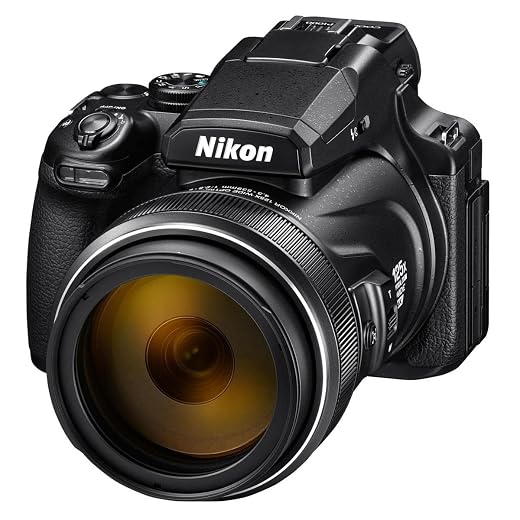
The Nikon P1100 is the best bridge camera for wildlife and birds if your priority is reach. Its 125x optical zoom (24–3000mm equivalent) lets you fill the frame with distant birds, shy mammals, and lunar detail that smaller zooms simply cannot touch, and it does so in a body that is far lighter and cheaper than a DSLR or mirrorless setup with a comparable telephoto lens.
Nikon COOLPIX P1100 Superzoom Digital Camera | 125x Optical Zoom with Image Stabilization 16 MP 4K Ultra HD Video Wi-Fi Connectivity RAW Format and Rotating…
2. Nikon COOLPIX P1100
The P1100 is the camera I hand to anyone whose main goal is birds, distant wildlife, and moon shots without investing in a full telephoto system. The 24–3000mm equivalent zoom range is genuinely extreme: you can frame a bird on a far branch, a deer on a distant hillside, or the craters on the moon with room to crop, all handheld. For safari trips, backyard birding, and casual astrophotography, that reach changes what you can realistically shoot.
Nikon has improvedthe P1000 handling and connectivity over the older P1000, adding USB‑C, better Wi‑Fi/Bluetooth, and a more refined menu system. The 4K 30p video is fine for documentation and social clips, though this is primarily a stills camera for distant subjects. Autofocus is decent for static or slow‑moving targets but not on the level of the RX10 V for fast action, so you will get the best results with patient birding, perched wildlife, and lunar work rather than sprinting mammals or low‑flying birds.
Image quality at the long end is inevitably softer than at wide angle, and the small sensor means high‑ISO noise appears early, but that is the trade‑off for this kind of reach in a compact body. If your priority is getting close to faraway subjects without a tripod and a $3,000 lens, the P1100 is the most practical tool in this category.
Pros
- 125x optical zoom (24–3000mm equivalent) for extreme reach
- Lightweight compared with DSLR/mirrorless telephoto setups
- Improved USB‑C and wireless connectivity over P1000
- Dedicated moon and bird modes simplify settings
- Affordable entry into serious superzoom photography
Cons
- Small sensor limits low‑light and high‑ISO performance
- Autofocus not fast enough for very rapid action
- Image quality softens at the extreme telephoto end
- 4K video basic compared with hybrid cameras
3. Nikon COOLPIX P950
NIkon COOLPIX P950 Superzoom Digital Camera | 83x Optical Zoom with Image Stabilization 16 MP 4K Ultra HD Video Wi-Fi Connectivity RAW Format and Rotating…
The P950 remains one of the best bridge cameras for wildlife travel because it balances reach, handling, and RAW support in a body that is easier to live with than the P1000/P1100 for general use. The 83x zoom (24–2000mm equivalent) is more than enough for most birding, safari, and moon work, and the ergonomics feel closer to a small DSLR, which matters on long days in the field.
Where the P950 shines is as a travel wildlife camera. It is heavy but manageable on a strap, the EVF is large and clear, and the RAW option gives you real latitude to pull detail out of shadows and correct color on post‑processing. Autofocus is reliable for perched birds, resting mammals, and lunar detail, though it will hunt a bit on fast, erratic subjects. Battery life is solid, and the dual control dials make exposure adjustments intuitive once you learn the layout.
Compared with the P1100, you give up some reach but gain a more polished shooting experience and often better prices on the used market. For anyone who wants serious telephoto capability without the bulk and cost of interchangeable lenses, the P950 is still a top pick in 2026.
Pros
- 83x zoom (24–2000mm) covers most wildlife and moon needs
- RAW support for serious post‑processing
- DSLR‑like ergonomics and large EVF
- Good battery life for field work
- Often excellent value used or discounted
Cons
- Heavier than compact travel cameras
- Autofocus slower than premium 1‑inch bridges
- Small sensor struggles in low light
- 4K video limited compared with hybrid models
Best bridge camera for travel and all‑round use
The Sony RX10 IV and Panasonic FZ1000 II are the best bridge cameras for travel and all‑round use because they combine a 1‑inch sensor, a versatile zoom range, and strong autofocus in bodies that are still manageable in a day bag. The RX10 IV leans toward wildlife and quick action, while the FZ1000 II is a more budget‑friendly 1‑inch option for general travel, family trips, and hybrid shooting.
Sony Cyber‑Shot RX10 IV with 0.03 Second Auto-Focus & 25x Optical Zoom (DSC-RX10M4), Black, 2.32
4. Sony Cyber‑shot RX10 IV
The RX10 IV is the camera I still recommend to photographers who want a proven, fast all‑in‑one for wildlife, sports, and travel without paying RX10 V prices. The 1‑inch sensor and 24–600mm f/2.8–4 lens are the same core formula as the newer model, and the 24 fps burst with excellent AF tracking still holds up for birds in flight, running animals, and school sports.
Where the RX10 IV feels most at home is in situations where you need speed and reach in one package. The autofocus locks on quickly and tracks well, the burst rate lets you capture the decisive moment in a sequence, and the 4K video is solid for travel clips and event documentation. It is not as refined in low light as the newest sensors, and it lacks some of the video features of the RX10 V, but for stills‑first shooters who want a reliable workhorse, it remains a top choice.
Build quality is excellent, the EVF is bright, and the controls are laid out for quick adjustments in the field. If you can find one at a good used price, it is one of the best values in the premium bridge category.
Pros
- 1‑inch sensor with strong image quality
- Fast 24–600mm f/2.8–4 lens for wide to telephoto
- 24 fps burst with excellent AF tracking
- Reliable 4K video for travel and events
- Rugged build and comfortable ergonomics
Cons
- Older than RX10 V, with fewer video features
- Low‑light performance behind newest sensors
- Premium price when bought new
- Zoom range shorter than extreme superzooms
5. Panasonic LUMIX FZ1000 II
Panasonic LUMIX FZ1000 II 20.1MP Digital Camera, 16x 25-400mm Leica DC Lens, 4K Video, Optical Image Stabilizer and 3.0-inch Display – Point and Shoot Camera…
The FZ1000 II is the best 1‑inch bridge camera for travelers who want image quality and versatility without the RX10 price tag. The 25–400mm equivalent lens covers most travel scenarios from landscapes to moderate telephoto, the 1‑inch sensor handles mixed light well, and the 4K video and photo features give you flexibility for both stills and motion.
This camera feels designed for people who shoot a bit of everything on trips: cityscapes, architecture, family portraits, wildlife encounters, and casual video. The touchscreen and articulating screen make it easy to compose from odd angles, and the EVF is clear enough for bright days. Autofocus is good for general use but not on the level of the RX10 series for fast action, so it is better suited to relaxed wildlife, street scenes, and travel documentation than serious sports.
Compared with the FZ2500, you give up some video tools and a slightly slower lens, but you gain a more compact body and lower cost. The FZ1000 II is a smart pick for anyone seeking a 1‑inch sensor bridge camera that fits in a day bag and performs well in most situations.
Pros
- 1‑inch sensor for strong image quality in a bridge body
- 25–400mm lens covers most travel needs
- 4K video and 4K Photo modes for hybrid shooting
- Articulating touchscreen for flexible composition
- Good value compared with the RX10 series
Cons
- Autofocus is not as fast as RX10 for action
- Zoom range shorter than wildlife‑focused bridges
- Low‑light performance behind newest sensors
- Fewer pro video features than FZ2500
Best bridge camera for moon and astrophotography
The Nikon P1000 is the best bridge camera for moon and astrophotography if your main goal is extreme reach on a budget. Its 125x zoom (24–3000mm equivalent) lets you fill the frame with lunar detail, capture planets as more than dots, and experiment with eclipses and meteor showers without investing in a telescope mount and dedicated astro camera.
NIkon COOLPIX P1000 Superzoom Digital Camera | 125x Optical Zoom with Image Stabilization 16 MP 4K Ultra HD Video Wi-Fi Connectivity RAW Format and Rotating…
6. Nikon COOLPIX P1000
The P1000 is the camera I suggest to anyone who wants to shoot the moon, planets, and distant wildlife without entering the world of telescopes and tracking mounts. The 24–3000mm equivalent zoom is genuinely in a different league from standard superzooms: you can frame the entire moon with room to crop, capture Jupiter and Saturn as small discs with visible moons, and reach birds or animals that would otherwise be impossible without a heavy telephoto lens.
This is not a low‑light or high‑ISO camera; the small sensor means you will be shooting the moon and bright planets at modest ISOs with careful exposure, and deep‑sky objects like the Milky Way will remain challenging. But for lunar detail, eclipses, and bright celestial events, the P1000 delivers results that look impressive on screens and prints, especially when you consider the size and cost compared with a DSLR/mirrorless telephoto setup.
Handling is similar to the P950 but larger, with a big EVF and DSLR‑style grip that help when you are balancing a long zoom on a tripod. Autofocus is fine for static subjects but not designed for fast action. If your priority is reaching for the moon and distant subjects on a budget, the P1000 remains hard to beat in 2026.
Pros
- 125x zoom (24–3000mm) for extreme lunar and wildlife reach
- Affordable compared with telephoto lens systems
- Large EVF and comfortable grip for long zoom work
- Dedicated moon mode simplifies exposure
- Good entry point into astrophotography and birding
Cons
- Small sensor limits low‑light and high‑ISO performance
- Bulky for travel compared with standard bridges
- Autofocus not suited to fast action
- Video features are basic compared with hybrid cameras
Best bridge camera for video and hybrid shooting
The Panasonic FZ2500/FZ2000 is the best bridge camera for video and hybrid shooting because it combines a 1‑inch sensor, a Leica 24–480mm lens, and a full suite of video tools like 10‑bit output, V‑Log, and focus peaking in a single body. If you shoot both photos and serious video for YouTube, travel films, or client work, this camera gives you more creative control than most bridge rivals.
Panasonic LUMIX FZ2500 4K Point and Shoot Camera, 20X Leica DC Vario-ELMARIT F2.8-4.5 Lens, 21.1 Megapixels, 1 Inch High Sensitivity Sensor, 422 10-bit, HDMI…
7. Panasonic LUMIX FZ2500 / FZ2000
The FZ2500 is the camera I recommend to hybrid shooters who want a 1‑inch sensor bridge camera that takes video as seriously as stills. The Leica 24–480mm equivalent lens is sharp and versatile, covering wide landscapes to moderate telephoto wildlife, and the 1‑inch sensor provides good dynamic range and color depth for grading. Where this camera really stands out is in its video feature set: 4K with 10‑bit external output, V‑Log for flat profiles, focus peaking, zebras, and manual audio control make it feel like a small cinema camera with a built‑in zoom.
For travel filmmakers, YouTubers, and event shooters, the FZ2500 offers a compelling alternative to carrying separate photo and video kits. You can shoot a day of stills and then switch to 4K with log profiles and manual control for interviews or B‑roll, all with one camera. Autofocus is decent for general use but not on the level of the RX10 series for fast action, so it is best for controlled video work rather than run‑and‑gun sports.
Build quality is solid, the EVF is clear, and the articulating screen helps with low and high angles. If you want a bridge camera that leans into video without sacrificing stills quality, the FZ2500 remains a top pick in 2026.
Pros
- 1‑inch sensor with strong image quality and dynamic range
- Leica 24–480mm lens, sharp across the range
- Advanced 4K video tools: 10‑bit output, V‑Log, focus peaking
- Articulating screen and clear EVF for flexible shooting
- Good hybrid balance of photo and video features
Cons
- Larger and heavier than compact travel bridges
- Autofocus is not as fast as RX10 for action
- Older than the newest models, with some menu quirks
- Zoom range shorter than wildlife‑focused superzooms
Best budget bridge camera for beginners
The Panasonic FZ80D/FZ82D and Canon SX70 HS are the best budget bridge cameras for beginners because they offer long zoom ranges, 4K video, and DSLR‑like handling at prices that don’t require a second mortgage. The FZ80D/FZ82D leans toward zoom and 4K features on a tight budget, while the SX70 HS offers a vari‑angle screen and a comfortable grip for general family and travel use.
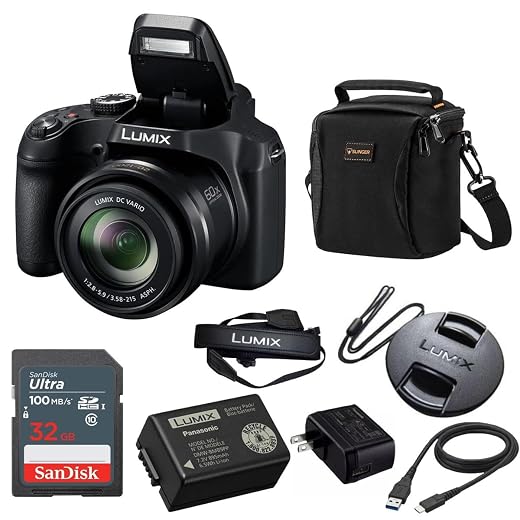
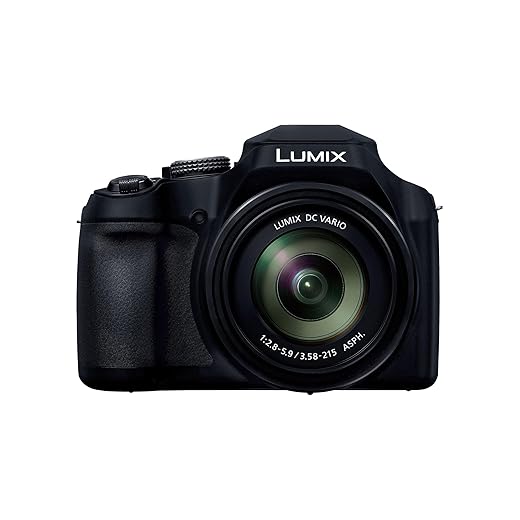
8. Panasonic LUMIX FZ80D / FZ82D
The FZ80D/FZ82D is the camera I suggest to beginners who want a long zoom and 4K video without spending a lot. The 60x zoom (20–1200mm equivalent) covers everything from wide landscapes to distant wildlife, and the 4K video and 4K Photo modes let you pull high‑resolution stills from video clips, which is great for learning timing and composition.
This camera is not about low‑light performance or pro‑level autofocus; it is about giving new photographers a single camera that can handle school events, family trips, zoo visits, and casual wildlife without overwhelming them with complexity. The EVF is useful in bright sun, the grip is comfortable, and the controls are straightforward enough to learn on without getting lost in menus.
Compared with the FZ300/FZ330, you give up the constant f/2.8 aperture and weather sealing but gain more zoom and a lower price. For anyone starting out in photography and wanting a versatile, affordable bridge camera, the FZ80D/FZ82D is a smart entry point.
Pros
- 60x zoom (20–1200mm) for wide-to-telephoto versatility
- 4K video and 4K Photo modes for hybrid shooting
- Affordable price for beginners and families
- EVF and comfortable grip for easy handling
- Simple controls good for learning photography
Cons
- Small sensor limits low‑light performance
- Autofocus basic compared with premium bridges
- Build quality and sealing behind higher‑end models
- Video features are basic compared with hybrid cameras
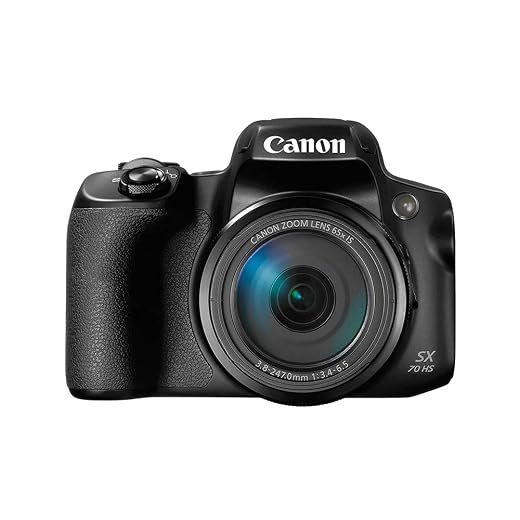
9. Canon PowerShot SX70 HS
Canon Powershot SX70 HS Digital Camera 21.1 megapixel
The SX70 HS is the best budget all‑round bridge camera for families and beginners who want a comfortable, DSLR‑like camera with a long zoom and a flip‑out screen. The 65x zoom (21–1365mm equivalent) covers most everyday situations, from group photos and school events to wildlife at the zoo and distant subjects on vacation, and the vari‑angle screen makes it easy to compose from low or high angles.
This camera feels designed for people who want one camera for everything: holidays, birthdays, trips, and casual wildlife. The grip is comfortable for long days, the EVF helps in bright light, and the 4K video is fine for family movies and social clips. Autofocus is decent for general use but not fast enough for serious sports or flight shots, so it is best for relaxed shooting rather than high‑speed action.
Compared with the FZ80D/FZ82D, you give up a bit of zoom but gain a more flexible screen and Canon’s user‑friendly interface. For anyone who wants an affordable, easy‑to‑use bridge camera for family and travel, the SX70 HS remains a solid choice in 2026.
Pros
- 65x zoom (21–1365mm) for versatile everyday shooting
- Vari‑angle screen for flexible composition
- Comfortable DSLR‑like grip and EVF
- 4K video for family and travel clips
- Affordable price for beginners
Cons
- Small sensor struggles in low light
- Autofocus not fast enough for serious action
- No RAW support limits post‑processing
- Video features are basic compared with hybrid cameras
10. Sony RX10 V vs Nikon P1100 vs Nikon P950: flagship showdown
If you want the best overall image quality, speed, and video, buy the Sony RX10 V. If your priority is extreme reach for birds, moon, and distant wildlife on a budget, buy the Nikon P1100. If you want a balance of reach, handling, and RAW support at a lower price than the P1100, the Nikon P950 is the sweet spot.
The RX10 V wins on sensor size, autofocus, burst speed, and video features, making it the best choice for serious wildlife, sports, and hybrid shooters who care about image quality and speed. The P1100 wins on pure zoom range, letting you get closer to distant subjects than the RX10 V can physically reach, but it trades off sensor size, low‑light performance, and AF speed. The P950 sits between them, offering strong reach, RAW support, and better handling than the P1100 at a lower cost, but without the 1‑inch sensor or speed of the RX10 V.
Best bridge camera deals and Black Friday 2026: what to expect
Expect the deepest discounts on older models like the RX10 IV, P950, FZ1000 II, and SX70 HS during Black Friday and Cyber Monday 2026, since retailers typically clear out previous‑generation stock once newer models like the RX10 V and P1100 have settled into the market. Bundled deals often include extra batteries, memory cards, or camera bags rather than straight price cuts on the newest flagship cameras.
Budget‑conscious buyers should watch for the FZ80D/FZ82D and SX70 HS dropping toward or below $300–$350, while mid‑range 1‑inch models like the FZ1000 II and FZ2500 may see modest discounts around $100–$200 off their regular prices. Flagship models like the RX10 V and P1100 rarely see steep discounts in their first holiday season, so anyone wanting those at a lower price should expect to wait until the following year’s sales cycle once a true successor arrives.
FAQs: which bridge camera should I buy?
Which bridge camera is best in 2026?
The Sony RX10 V is the best overall bridge camera in 2026 for image quality, speed, and video, while the Nikon P1100 is the top choice for extreme zoom reach for birds and moon shots.
Is the Sony RX10 V worth it over the RX10 IV?
Yes, if you care about the latest autofocus, 30 fps burst, and 4K 120p video, the RX10 IV remains a great value for stills‑first shooters who can find it at a good used price.
Which bridge camera has the best zoom for moon shots?
The Nikon P1000 and P1100 have the best zoom for moon shots, with a 125x (24–3000mm equivalent) reach that fills the frame with lunar detail.
Which bridge camera is best for wildlife and birds?
The Sony RX10 V is best for fast wildlife and birds thanks to its 1‑inch sensor and advanced AF, while the Nikon P1100 is best for distant, patient birding and wildlife where reach matters most.
Which bridge camera is best for travel?
The Sony RX10 IV and Panasonic FZ1000 II are the best bridge cameras for travel, balancing image quality, zoom range, and size in a single all‑in‑one body.
Is a used Nikon P950/P1000 still good in 2026?
Yes, both are still good in 2026 for wildlife, moon, and general superzoom use, especially at used prices that make them excellent value compared with newer models.
Which bridge camera is best for video and hybrid shooting?
The Panasonic FZ2500/FZ2000 is the best bridge camera for video and hybrid shooting, with 10‑bit output, V‑Log, and strong manual controls.
Sony RX10 V vs Nikon P1100: which should you buy for wildlife and travel?
Choose the RX10 V for faster action, better image quality, and video; choose the P1100 for extreme reach on distant birds, wildlife, and moon shots on a budget.


