

What are the best DSLR cameras in 2026? For professional speed, the Canon EOS-1D X Mark III remains the most complete choice here; for most serious photographers, the Nikon D780 and Pentax K-3 Mark III offer the more sensible balance of capability, size, and cost. This guide covers 12 digital SLR bodies, from hard-working flagship cameras to straightforward entry models, including several older bodies that still make unusually good sense on the used and remaining-stock market.
DSLRs are no longer the newest route into interchangeable-lens photography, but that is not the same as being irrelevant. An optical viewfinder has no lag, a substantial grip is comfortable through a long day, and mature used markets make a well-chosen DSLR a practical tool rather than a nostalgia purchase. The real question is not whether a newer mirrorless camera exists; it is whether the camera in your hand matches the work you actually want to make.
Which DSLR camera is best in 2026?


![Pentax K-3 Mark Iii Monochrome [A Monochrome-Specific Digital Slr Camera] [Field Of View 100%, Approx. 1.05X Optical Viewfinder] [Dustproof/Weather-Resistant Construction ]](https://m.media-amazon.com/images/I/71dqgVUIfkL._SS520_.jpg "Best Dslr Cameras In 2026: 12 Powerful Picks Still Worth Buying 4")

![Canon Dslr Camera [Eos 90D] With 18-135 Is Usm Lens | Built-In Wi-Fi, Bluetooth, Digic 8 Image Processor, 4K Video, Dual Pixel Cmos Af, And 3.0 Inch Vari-Angle Touch Lcd Screen, Black](https://m.media-amazon.com/images/I/71ZAHr49TPL._SS520_.jpg "Best Dslr Cameras In 2026: 12 Powerful Picks Still Worth Buying 6")



The Canon EOS-1D X Mark III is the best DSLR for sports, wildlife, and paid action work. The Nikon D780 is the best all-round full-frame DSLR for photographers who want excellent stills and credible 4K video without flagship weight, while the Pentax K-3 Mark III is the standout APS-C choice for enthusiasts who value a rugged body, in-body stabilization, and a superb optical finder.
| Pick | Best for | Sensor | Standout trait |
|---|---|---|---|
| Canon EOS-1D X Mark III | Sports, wildlife, news | 20.1 MP full frame | 20 fps Live View shooting |
| Nikon D6 | Professional sports | 20.8 MP full frame | Dependable pro handling and AF |
| Pentax K-3 Mark III | Enthusiasts | 25.7MP APS-C | Weather-sealed body with IBIS |
| Pentax K-3 Mark III Monochrome | Black-and-white work | 25.7MP APS-C mono | Dedicated monochrome sensor |
| Nikon D780 | Hybrid stills and video | 24.5 MP full frame | Strong low-light performance and 4K |
| Canon EOS 90D | Wildlife and reach | 32.5MP APS-C | Resolution plus 10 fps |
| Canon EOS Rebel T8i / 850D | Guided learning | 24.1 MP APS-C | Vari-angle screen and friendly controls |
| Canon EOS Rebel SL3 / 250D | Small travel DSLR | 24.1 MP APS-C | Light, simple body |
| Nikon D7500 | Mid-range value | 20.9MP APS-C | Strong handling and 8 fps |
| Canon EOS Rebel T7 / 2000D | Lowest-cost entry | 24.1 MP APS-C | Familiar, uncomplicated operation |
| Nikon D3500 | Students and first-time owners | 24.2MP APS-C | Excellent battery endurance |
| Pentax K-1 Mark II | Landscapes and studio | 36.4MP full frame | IBIS, Pixel Shift, rugged construction |
Prices vary sharply by condition, shutter count, included accessories, and local availability. In 2026, treat the price tier as a buying framework rather than a promise: entry bodies often fall below $500 used, capable enthusiast kits commonly land in the $500–$1,500 range, and clean professional flagships still command several thousand dollars.
What is the best DSLR for sports and wildlife photography?
For uncompromising sports and wildlife photography, buy the Canon EOS-1D X Mark III if its size and price are acceptable. The Nikon D6 is the alternative for photographers invested in Nikon F-mount lenses and a traditional pro workflow; the Canon EOS 90D and Nikon D7500 are more affordable crop-sensor options when extra apparent reach matters.
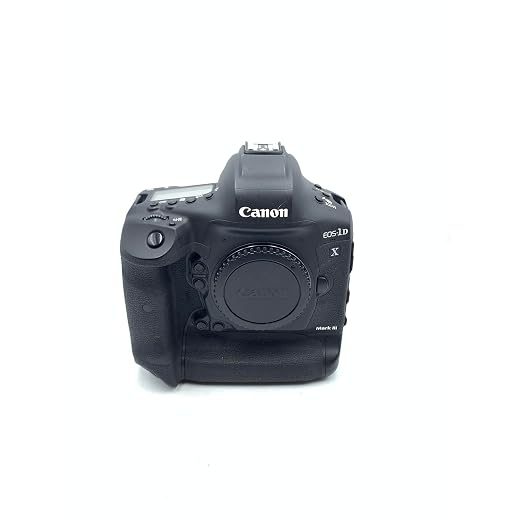
Canon EOS-1D X Mark III — Best DSLR for speed, sports, and wildlife
Canon EOS-1D X Mark III Body
The Canon EOS-1D X Mark III is built for the moment when the action refuses to slow down. Its 20.1MP full-frame sensor may sound modest beside high-resolution bodies, but the file size is intentional: it keeps the camera fast, manageable, and confident at high ISO. In Live View it can shoot at up to 20 fps, while optical-viewfinder shooting reaches 16 fps. That is why it remains a serious answer to “best DSLR for burst shooting.”
The body feels like equipment rather than an accessory. The integrated vertical grip, deep controls, dual CFexpress slots, large battery, and thorough weather sealing are designed for cold sidelines, dusty tracks, wet touchlines, and long event days. Its 191-point viewfinder AF system and intelligent tracking are excellent for erratic subjects. A bird cutting across a pale sky or an athlete moving toward the camera is not straightforward work; this Canon gives you a very high chance of coming home with the frame.
Video is unusually strong for a DSLR of this type. It records 5.5K RAW internally and 4K at high frame rates, though the storage, processing, and editing workload are substantial. That makes it useful for productions that need serious motion footage, not merely a few clips between still photographs.
Who should buy it: working sports photographers, wildlife specialists, photojournalists, and event shooters who value speed, battery life, and physical controls more than a light bag.
Pros
- Extremely fast continuous shooting with deep buffers
- Excellent subject tracking and high-ISO results
- Rugged weather-sealed professional body
- Dual CFexpress card slots and substantial battery life
- 5.5K RAW and advanced 4K video options
Cons
- Heavy, large, and expensive even second-hand
- CFexpress cards add to the real purchase cost
- Its 20MP resolution is not ideal for aggressive cropping
- Overkill for casual travel and family pictures
Nikon D6—Best DSLR for professional sports reliability
Nikon D6 FX-Format Digital SLR Camera Body, Black
The Nikon D6 is not trying to win a specification contest. It is a Nikon flagship designed around reliable delivery: 20.8MP full-frame files, a 14 fps burst rate, a tough integrated-grip body, and autofocus behavior tuned for professional sports and news work. If you spend a day photographing fast play under uneven stadium lighting, dependability is more valuable than a long menu of experimental features.
Its 105-point all-cross-type AF system is particularly reassuring through the optical viewfinder. The controls are placed for quick adjustment with gloves or without taking your eye away from the action, and the grip makes portrait orientation feel just as natural as landscape orientation. It is the best DSLR for events when missed moments cost more than a little extra weight.
The D6 records 4K video, but it is not the better choice for someone buying primarily to create cinematic hybrid work. Nikon’s D780 is more flexible for that. Buy the D6 because you have a demanding stills assignment, compatible Nikon equipment, and a reason to appreciate a camera that can continue to work through a full day without becoming precious.
Who should buy it: professional sports, news, and wildlife photographers already comfortable with Nikon’s F-mount ecosystem.
Pros
- Pro-grade autofocus system and 14 fps shooting
- Superb ergonomics for long assignments
- Very durable, sealed construction
- Strong low-light image quality
- Long battery life and dual card workflow
Cons
- Expensive and physically imposing
- 4K video is secondary to its stills mission
- Resolution favors speed over heavy cropping
- Less attractive than newer systems for face and eye tracking in video
Which DSLR is best for enthusiasts and advanced amateurs?
The Pentax K-3 Mark III is the best DSLR for enthusiasts who want a compact-ish APS-C body that feels deeply serious. The Canon EOS 90D is the better fit for Canon users who want more resolution and responsive Dual Pixel autofocus in Live View, while the Pentax K-3 Mark III Monochrome is a specialist’s camera for people committed to black-and-white photography.
Pentax K-3 Mark III—Best enthusiast APS-C DSLR
Pentax K-3 Mark III Flagship APS-C Black Camera Body – 12fps, Touch Screen LCD, Weather Resistant Magnesium Alloy Body with in-Body 5-Axis Shake Reduction….
The Pentax K-3 Mark III is a camera that feels purpose-built for photographers who simply enjoy taking pictures. Its 25.7MP APS-C sensor gives enough detail for large prints and thoughtful crops, while its 12 fps maximum burst rate gives it real authority for action. The larger story is tactile: the bright 1.05x optical finder, dedicated control points, and dense magnesium-alloy body make it a camera you want to pick up.
Five-axis in-body image stabilization is a major advantage. It helps with handheld city scenes at dusk, static wildlife, travel interiors, and carefully composed landscape frames. Combine that with weather sealing and a rugged build, and the K-3 Mark III becomes one of the best DSLR cameras for outdoor work. It also offers 4K/30p, dual SD-card slots, and a 101-point phase-detect autofocus system with 25 cross-type points.
There are trade-offs. Live View autofocus and video tracking do not match the best contemporary mirrorless bodies, and the Pentax system has a smaller new-product ecosystem than Canon or Nikon. But if you like an optical finder, prefer a thoughtfully engineered tool, and shoot mostly stills, those caveats do not erase its appeal. This is the Pentax K-3 Mark III for enthusiasts in the most literal sense: a camera made for people who care how photography feels.
Who should buy it: advanced amateurs, outdoor photographers, traditional DSLR fans, and Pentax users wanting the strongest APS-C body in the system.
Pros
- Detailed APS-C sensor and 12 fps performance
- Five-axis IBIS and robust weather sealing
- Exceptional optical viewfinder and direct controls
- Dual SD slots, including UHS-II support in one slot
- Strong JPEG rendering and RAW flexibility
Cons
- Video AF is less polished than leading hybrid cameras
- Fixed rear screen limits some angles
- Smaller native system and resale market than Canon or Nikon
- Not the cheapest enthusiast body
Pentax K-3 Mark III Monochrome—Best DSLR for black-and-white photography
PENTAX K-3 Mark III Monochrome [A Monochrome-Specific Digital SLR Camera] [Field of View 100%, Approx. 1.05x Optical viewfinder] [Dustproof/Weather-Resistant…
The Pentax K-3 Mark III Monochrome is not a sensible all-purpose recommendation, and that is precisely why it is compelling. Its 25.7MP APS-C monochrome sensor records no color information. In return, it gives black-and-white photographers a different kind of file: fine detail, clean tonal transitions, and the freedom from having to decide later whether an image should become monochrome.
The body is the familiar K-3 Mark III shell, with weather sealing, five-axis stabilization, a bright optical viewfinder, 101 AF points, and up to 12 fps shooting. Its sensitivity range extends to ISO 1,600,000, though extreme settings remain an artistic rather than technical choice. It also supports 4K recording, but video is not why anyone should choose a monochrome-only camera.
This model rewards intention. On a street walk, you begin seeing shape, texture, light, and negative space before pressing the shutter. That mental shift is the point. If you frequently convert most of your work to black and white anyway, it offers a distinctive and focused experience. If you need color for clients, travel, or family life, choose the standard K-3 Mark III instead.
Who should buy it: dedicated black-and-white artists, documentary photographers, and Pentax collectors who want a camera with a clear creative identity.
Pros
- Purpose-built monochrome sensor with exceptional tonality
- Same rugged, stabilized body as the color K-3 Mark III
- Fast burst shooting and capable phase-detect AF
- Excellent optical finder and physical controls
Cons
- Cannot produce color photographs
- Premium niche pricing
- Fixed screen and modest video relevance
- Best appreciated by a narrow, committed audience
Canon EOS 90D — Best DSLR for wildlife reach and detailed APS-C files
Canon DSLR Camera [EOS 90D] with 18-135 is USM Lens | Built-in Wi-Fi, Bluetooth, DIGIC 8 Image Processor, 4K Video, Dual Pixel CMOS AF, and 3.0 Inch…
The Canon EOS 90D is a very practical best DSLR for wildlife photography on a sensible budget. Its 32.5 MP APS-C sensor gives you more pixels on a distant subject than many full-frame bodies, and its 10 fps burst rate is quick enough for birds, field sports, and energetic children. It is also one of the more pleasant Canon DSLRs for someone who alternates between the optical finder and rear screen.
Through the viewfinder, the 45-point all-cross-type AF system handles traditional action work well. In Live View, Dual Pixel CMOS AF makes the fully articulating touchscreen genuinely useful for low-angle scenes, video, and tripod work. It captures uncropped 4K/30p, a welcome feature in a body that is now more accessible to find below its original price tier.
The 90D lacks in-body stabilization, and the fine pixel pitch asks more of your shutter speed and technique in dim light. Yet for daylight wildlife, travel, portraits, and outdoor events, it offers a rare combination of resolution, reach, approachable controls, and respectable video. It is a particularly effective bridge between beginner Canon bodies and professional equipment.
Who should buy it: Canon photographers who want an advanced APS-C DSLR for wildlife, sports, travel, and high-resolution everyday photography.
Pros
- High-resolution 32.5MP APS-C sensor
- 10 fps burst and capable viewfinder AF
- Vari-angle touchscreen with Dual Pixel Live View AF
- Uncropped 4K/30p recording
- Comfortable, weather-resistant enthusiast build
Cons
- No IBIS
- High ISO noise arrives sooner than with full-frame choices
- Single SD-card slot
- Not as rugged as a flagship sports body
What is the best DSLR for hybrid photo and video?
The Nikon D780 is the best DSLR for hybrid photo and video because it combines a 24.5MP full-frame sensor, dependable viewfinder shooting, modern on-sensor autofocus in Live View, and high-quality 4K recording. It is the most balanced choice here for weddings, portraits, documentary work, and creators who need both polished stills and usable motion footage.
Nikon D780—Best full-frame DSLR for hybrid work
Nikon D780 DSLR Camera Body Only 24.5MP (1618) Bundle
The Nikon D780 succeeds because it does two different jobs well. Looking through its optical finder, it behaves like a confident traditional DSLR with a 51-point phase-detect AF system, strong battery life, and direct exposure controls. Switch to Live View, and it uses a 273-point hybrid autofocus system with on-sensor phase detection, face and eye detection, and a quieter, more video-friendly way of working.
Its 24.5MP full-frame sensor has the resolution most photographers actually need: enough for editorial prints, wedding albums, portraits, and reasonable crops without making every card and hard drive groan. Low-light performance is excellent, dynamic range leaves room for careful RAW editing, and the camera can record 4K UHD video. Slow motion in Full HD and dual SD slots make it a capable tool for a disciplined client workflow.
The tilting screen is useful but not fully articulating, so it is less convenient for solo talking-head video than a Canon with a vari-angle display. It also has no in-body stabilization, making stabilized lenses, a tripod, or a gimbal more important for handheld video. Still, the D780 has an uncommon grace: it feels conventional when you want a DSLR and current when you need screen-based autofocus.
Who should buy it: wedding and portrait photographers, small-business creators, travel photographers, and Nikon users needing one body for stills and 4K video.
Pros
- Excellent 24.5MP full-frame image quality
- Two distinct AF personalities: viewfinder and Live View
- Strong high-ISO performance and dynamic range
- 4K video, Full HD slow motion, dual SD slots
- Comfortable controls and long battery life
Cons
- No IBIS
- The tilting display does not face forward
- Video tools are less expansive than dedicated cinema-oriented bodies
- Not ideal for the fastest professional sport
Nikon D7500 — Best mid-range DSLR for action-focused hobbyists
Nikon D7500 DX-Format Digital SLR Body
The Nikon D7500 is older than the stated 2019 release, but it remains a smart choice for remaining stock or used options because it has not become less capable. Its 20.9MP APS-C sensor, 51-point autofocus system, and 8 fps continuous shooting create a persuasive package for hobbyists photographing sport, pets, travel, and wildlife. The sensor shares its spirit with higher-end Nikon APS-C designs, prioritizing usable high-ISO results and speed over headline resolution.
The grip is excellent, the body feels solid, and the tilting touchscreen makes ground-level work easier. It records 4K video and uses a single SD card slot. That last detail, plus the lack of a fully articulating screen, tells you where it sits: this is a photographer-first mid-range DSLR, not a miniature production studio.
For someone deciding between the D7500 and D3500, the D7500 is the camera to choose when you already understand exposure basics and want more responsive controls, quicker bursts, tougher construction, and stronger autofocus. It remains one of the best DSLR cameras under $1,000 when priced realistically on the used market.
Who should buy it: intermediate Nikon shooters who prioritize action, ergonomics, and low-light capability over the newest interface features.
Pros
- 8 fps shooting and reliable 51-point AF
- Good high-ISO output from the 20.9MP APS-C sensor
- Solid grip and enthusiast-oriented controls
- 4K video and tilting touchscreen
Cons
- Single card slot
- No in-body stabilization
- Older connectivity and Live View experience
- Less resolution than the Canon 90D
Which DSLR is best for beginners and families?
The Canon EOS Rebel T8i / 850D is the best DSLR for beginners who want to improve, thanks to its guided controls, 24.1MP sensor, flexible touchscreen, and 7 fps burst rate. The smaller Canon EOS Rebel SL3 / 250D is better for travel and family use, while the Nikon D3500 remains the simplest recommendation for a student who wants outstanding battery life and a clear learning path.
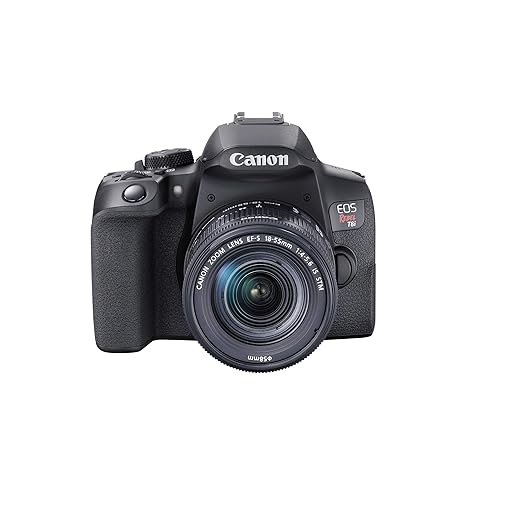
Canon EOS Rebel T8i / 850D — Best beginner DSLR with room to grow
Canon EOS Rebel T8i EF-S 18-55mm is STM Lens Kit, Black (Renewed)
The Canon EOS Rebel T8i, also called the 850D in some markets, understands what a first interchangeable-lens camera needs to do: make learning feel inviting. Its 24.1MP APS-C sensor delivers attractive photographs with plenty of detail, while the guided interface can explain settings without turning every photo walk into a technical class. When confidence arrives, the physical controls and 45-point all-cross-type viewfinder AF system provide a genuine next step.
Its vari-angle touchscreen is the headline feature in real use. You can frame children at their level, photograph food from above, set up a tripod shot, or record yourself without contorting around the camera. In Live View, Canon’s Dual Pixel autofocus feels natural for family video and casual subject tracking. It records 4K, though with a crop that makes wide framing more difficult.
The T8i is not weather-sealed, does not offer IBIS, and uses a single SD card. Those are reasonable omissions at this level. Its value is that it can begin as a friendly automatic camera, then become a manual-exposure teaching tool, portrait camera, and everyday companion. For many households, that trajectory matters more than a specification race.
Who should buy it: beginners, parents, hobbyists, and first-time video creators who want guidance without being boxed into beginner-only controls.
Pros
- Friendly guided modes plus ample manual control
- Vari-angle touchscreen and effective Live View AF
- 24.1 MP sensor and 7 fps continuous shooting
- 4K recording and wireless sharing features
Cons
- 4K capture carries a crop
- No IBIS or weather sealing
- Single card slot
- Smaller viewfinder experience than enthusiast bodies
Canon EOS Rebel SL3 / 250D—Best compact DSLR for travel
Canon EOS Rebel SL3 Digital SLR Camera with EF-S 18-55mm Lens kit, Built-in Wi-Fi, Dual Pixel CMOS AF and 3.0 Inch Vari-Angle Touch Screen, Black
The Canon EOS Rebel SL3 / 250D is the best DSLR for travel photographers who still want an optical viewfinder but refuse to carry a large body. It is remarkably light for a DSLR, yet it uses the same useful 24.1MP APS-C resolution class as the T8i. With a small Canon EF-S lens, it slips into a day bag where larger cameras would get left behind.
The fully articulating touchscreen and Dual Pixel Live View AF make it friendlier than many older compact DSLRs. It can record 4K video, again with a crop, and it has a straightforward interface that works well for family pictures, travel diaries, and learning exposure. Battery life is respectable, especially when you compose primarily through the optical finder.
The trade-off is pace. Its 5 fps burst rate and simpler autofocus arrangement are fine for casual movement but not the best choice for serious wildlife or competitive sport. Think of it as a camera for someone who wants better image quality and lens choice than a phone offers, without turning every outing into a gear exercise.
Who should buy it: travelers, parents, students, and beginners who value low weight, a flip screen, and familiar Canon operation.
Pros
- One of the lightest, easiest DSLRs to carry
- 24.1MP sensor with pleasing everyday results
- Fully articulating touchscreen and Dual Pixel Live View AF
- 4K video and strong battery efficiency
Cons
- 4K crop limits wide-angle video
- 5 fps is modest for fast action
- Small grip and limited weather resistance
- Single SD-card slot
What is the best budget DSLR for learning photography?
For the lowest purchase cost, the Canon EOS Rebel T7 / 2000D is often the most accessible way to get a 24.1MP DSLR system. The Nikon D3500 is the better all-round teaching camera if you can find one in good condition, as its Guide Mode, handling, image quality, and battery life make it easier to keep using after the novelty wears off.
Canon EOS Rebel T7 / 2000D—Best low-cost Canon DSLR
Canon EOS Rebel T7 DSLR Camera EF-S 18-55mm f/3.5-5.6 is II Lens Kit, 24.1 Megapixel CMOS (APS-C) Sensor, Full HD Videos, Built-in Wi-Fi, Beginner…
The Canon EOS Rebel T7 / 2000D is a basic camera in both the best and worst senses of the word. It gives you a 24.1MP APS-C sensor, an optical viewfinder, straightforward menus, and access to a wide used market of Canon EF and EF-S lenses. It does not pretend to be a creator-focused hybrid machine, which can make it less intimidating for somebody who only wants to learn exposure, focus, and composition.
The limitations are clear. Its nine-point autofocus system is dated, continuous shooting peaks around 3 fps, the rear display is fixed and not touch-sensitive, and video tops out at 1080p. Do not buy it as the best DSLR for sports, rapid subject tracking, or polished 4K video. Buy it because it is inexpensive, simple, and capable of making much better photographs than its entry-level label suggests when paired with patience and a decent lens.
A used T7 can be an excellent first body when the budget needs to preserve room for a spare battery, SD card, and one useful everyday lens. It is also a reasonable backup camera for a Canon owner who wants a simple body for family use.
Who should buy it: cost-conscious beginners who want a Canon system camera and mainly shoot still subjects, portraits, travel, and casual family images.
Pros
- Affordable route to a 24.1MP APS-C sensor
- Simple controls and familiar Canon menus
- Broad accessory and lens market
- Good image quality for the price
Cons
- Slow 3 fps burst rate
- Basic nine-point autofocus system
- Fixed, non-touch display
- 1080p video only
Nikon D3500 — Best DSLR for students and first-time photographers
Nikon D3500 W/ AF-P DX NIKKOR 18-55mm f/3.5-5.6G VR Black
The Nikon D3500 earns its reputation because it removes friction. It has a 24.2MP APS-C sensor that produces clean, detailed files, a useful Guide Mode that explains photographic choices, and exceptional battery life for a small DSLR. It is the best DSLR for learning photography when the goal is to get out of automatic mode without being overwhelmed.
At 5 fps, it is a little quicker than the Canon T7 for casual action. Its 11-point autofocus system is still entry level, so do not expect it to lock onto a rapidly approaching bird with the certainty of a D6. But for school projects, travel, portraits, landscapes, and everyday pictures, it is more than sufficient. The compact body and deeply sensible control layout encourage use rather than menu-diving.
Like the T7, it has a fixed screen and records 1080p rather than 4K. Its Bluetooth-based image transfer is convenient for simple phone sharing but not a substitute for a serious client workflow. Find a clean used example, check the sensor and shutter operation, and it can carry a new photographer from their first lesson to genuinely good work.
Who should buy it: students, families, and beginners who want the clearest path to better still photography for modest money.
Pros
- Excellent 24.2MP APS-C image quality
- Outstanding battery life
- Guide Mode makes learning exposure approachable
- Light, comfortable body and 5 fps shooting
Cons
- Basic 11-point AF system
- No 4K video or touchscreen
- Fixed rear display
- Limited advanced controls and expansion features
What is the best full-frame DSLR for landscapes and studio work?
The Pentax K-1 Mark II is the best value full-frame DSLR for landscape photographers and studio-minded image makers who want high resolution, in-body stabilization, and weather protection. The Nikon D780 is more versatile for events and video, but the K-1 Mark II is the stronger pick when deliberate, detailed still images matter most.
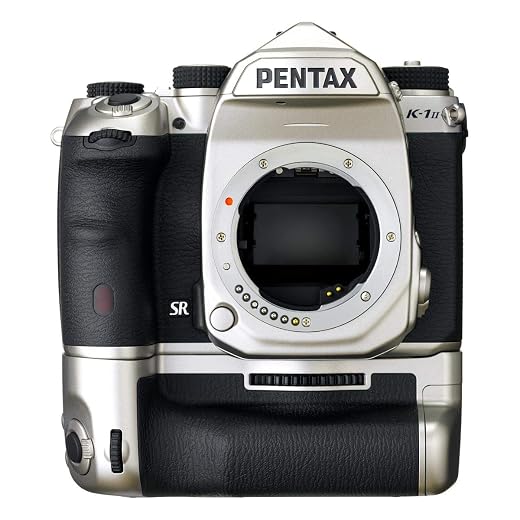
Pentax K-1 Mark II—Best value full-frame DSLR for landscapes
Pentax K-1 Mark II DSLR Camera Body, Limited Silver Edition, with BG-6 Battery Grip
The Pentax K-1 Mark II remains a fascinating used full-frame choice because it offers features that still feel generous: a 36.4MP sensor, five-axis in-body stabilization, a weather-sealed body, and Pixel Shift Resolution for carefully controlled scenes. Its files have the latitude landscape photographers want when recovering bright skies and dark foregrounds, and the resolution rewards good technique, a stable tripod, and careful focus.
It is not a speed specialist. At up to 4.4 fps, the K-1 Mark II is content to work slowly, and its autofocus is not the system to choose for elite sport. But that pace suits its personality. The camera allows you time to compose, whether you are in a studio, on a quiet coast, or in a city at blue hour. The unusual tilting rear display is genuinely useful when the camera is low or high on a tripod.
Video is limited to 1080p, so hybrid creators should look toward the Nikon D780. The Pentax is for still photographers who value full-frame detail, stabilization with many compatible lenses, and a body built to tolerate poor weather. It is among the best DSLR cameras for image quality when found at a fair used price.
Who should buy it: landscape, architecture, studio, portrait, and fine-art photographers who prioritize resolution and stabilization over fast action and 4K video.
Pros
- Detailed 36.4MP full-frame sensor
- Five-axis IBIS and Pixel Shift capability
- Weather-sealed, durable body
- Useful flexible-screen design for tripod work
- Excellent value in the used full-frame market
Cons
- Slow burst rate for action
- 1080p video only
- Autofocus is less competitive for fast subjects
- Larger and heavier than many modern alternatives
Canon EOS-1D X Mark III vs. Nikon D6: which flagship DSLR should you buy?
Choose the Canon EOS-1D X Mark III for the faster 20 fps Live View burst, 5.5K RAW video, and more ambitious hybrid feature set. Choose the Nikon D6 if you are already invested in Nikon F-mount equipment and want a straightforward flagship built around viewfinder sports photography, rugged handling, and dependable professional delivery.
Neither is a casual purchase. The Canon is the more versatile technical package, particularly for photographers who also need serious video. The D6 remains deeply persuasive for a Nikon professional who knows its controls by feel, values its 105-point all-cross-type AF system, and needs a camera that prioritizes unbroken stills workflow over novelty.
Pentax K-3 Mark III vs Canon EOS 90D: which enthusiast DSLR is better?
The Pentax K-3 Mark III is better for enthusiasts who value weather sealing, in-body stabilization, a premium optical viewfinder, and a rugged photographer-first body. The Canon EOS 90D is better for shooters who need more resolution, a vari-angle screen, smoother Live View autofocus, and uncropped 4K video.
For hiking, deliberate stills, and bad-weather use, I would choose the K-3 Mark III. For wildlife with long reach, family video, and flexible screen-based framing, I would choose the 90D. The difference is less about which makes better photographs and more about which working style feels natural.
Nikon D780 vs. Canon 5D Mark IV: which full-frame DSLR is better for hybrid work?
The Nikon D780 is the more sensible hybrid photo/video purchase in 2026 because its Live View autofocus, 4K implementation, and newer operating concept are more useful for mixed stills and video work. The Canon 5D Mark IV remains a respected event and portrait body, but it is not one of the 12 detailed picks in this guide and makes the most sense for existing Canon owners with compatible equipment.
For photographers using the optical finder almost exclusively, both can produce excellent full-frame files. For a wedding photographer who alternates between stills, quiet Live View, short clips, and low-light scenes, the D780 is easier to recommend from scratch.
What DSLR deals should shoppers expect around Black Friday 2026?
The strongest DSLR bargains are likely to be used bodies, store-clearance stock, and kits with older lenses rather than deep discounts on new flagship equipment. Focus on condition, shutter operation, battery health, card-door integrity, sensor cleanliness, included charger, and return terms—not just the lowest advertised number.
A realistic shopping plan is simple:
- Under $500: Nikon D3500, Canon Rebel T7, and occasionally a clean Rebel SL3 body.
- $500–$1,000: Canon 90D, Nikon D7500, Rebel T8i kits, and selected Pentax bodies depending on condition.
- $1,000–$2,000: Nikon D780 and Pentax K-1 Mark II packages are the most compelling full-frame value in this range.
- $2,000–$5,000: clean flagship Canon EOS-1D X Mark III and Nikon D6 bodies may appear, often without the original new-camera premium.
- $5,000+: buy only when the flagship body, compatible lenses, and paid work genuinely justify the spend.
FAQs: which DSLR camera should I buy?
Which DSLR camera is best overall in 2026?
For most serious photographers, the Nikon D780 is the best overall balance of full-frame image quality, low-light ability, dependable handling, and 4K video. The Canon EOS-1D X Mark III is the best overall choice only if fast professional action is your primary need.
Which DSLR is best for sports and wildlife photography?
The Canon EOS-1D X Mark III is the top pick for professional sports and wildlife because of its fast burst rates, sophisticated tracking, pro build, and high-ISO performance. On a smaller budget, the Canon EOS 90D and Nikon D7500 are sensible APS-C alternatives.
Which DSLR is best for beginners?
The Nikon D3500 is the best beginner DSLR for straightforward still photography, while the Canon Rebel T8i is better if a vari-angle touchscreen and 4K video matter. Both provide 24MP-class APS-C sensors and a clear route into manual control.
Which DSLR is best for hybrid photo and video?
The Nikon D780 is the best DSLR for hybrid photo/video work in this selection. Its full-frame sensor, 4K video, and on-sensor autofocus in Live View make it more flexible than traditional DSLR-only designs.
Which DSLR is best for landscapes and studio work?
The Pentax K-1 Mark II is the strongest landscape and studio recommendation because it combines a 36.4MP full-frame sensor, in-body stabilization, weather sealing, and Pixel Shift. It is designed for careful, high-quality still photography rather than rapid action.
Is the Canon EOS-1D X Mark III worth it over the Nikon D6?
It is worth choosing over the D6 if you need 20 fps Live View shooting and 5.5K RAW video alongside elite sports performance. The D6 remains the more logical buy for a Nikon professional with an established F-mount kit and a stills-first workflow.
Is the Pentax K-3 Mark III worth it for enthusiasts?
Yes, especially for photographers who value a high-quality optical viewfinder, weather sealing, in-body stabilization, and direct controls. It is less compelling for creators who rely heavily on advanced video autofocus.
Which DSLR is best under $500?
A clean Nikon D3500 is usually the best choice under $500 for learning photography, and a Canon Rebel T7 is the lowest-cost entry point for many Canon buyers. At this budget, condition, and a usable included lens matter more than small differences in specifications.
What is the best DSLR for everyday carry?
The Canon Rebel SL3 / 250D is the best everyday-carry DSLR here because it is notably light, compact, and equipped with a fully articulating screen. It is still too large for a pocket but small enough that a shoulder bag does not feel like a commitment.
Final buying advice
Buy the DSLR that fits the photographs you make, not the one with the most intimidating specification sheet. The EOS-1D X Mark III and D6 are extraordinary for professional speed; the D780 is the mature full-frame all-rounder; the K-3 Mark III is a joy for committed enthusiasts; the 90D stretches APS-C reach; and the D3500, T8i, SL3, and T7 make learning accessible.
A good camera should make you want to go outside, notice light, and take another frame. In 2026, these 12 DSLR cameras still do that exceptionally well.


