

Is the Pentax K-1 Mark II still worth buying? Yes—for photographers who put landscapes, carefully made portraits, night skies, weather, and tactile handling ahead of rapid action, 4K video, and the newest subject-recognition systems. This 36.4MP full-frame DSLR remains unusual because it combines a high-resolution AA-filter-free sensor, five-axis in-body stabilization, Pixel Shift, GPS-based Astrotracer, and a seriously weather-sealed body at a value that older professional full-frame DSLR cameras rarely match.
This Pentax K-1 Mark II review comes down to temperament. It is a camera that asks you to slow down just enough to see the frame, then rewards that attention with rich RAW files, excellent JPEG color, and controls that feel built for cold hands and long days outside. It’s not the best choice for every assignment, but for the right photographer, it’s one of the most satisfying full-frame DSLRs to use.
Is the Pentax K-1 Mark II still worth buying?

The K-1 Mark II is worth buying if you want a rugged full-frame DSLR for landscape photography, portraiture, architecture, macro, travel, or astrophotography. Skip it if your work depends on fast-moving subjects, dependable face detection across the frame, light carry weight, or 4K video.
The value proposition is unusually clear. A clean used body can provide 36-megapixel files, in-body stabilization with almost any compatible K-mount option, dual SD-card slots, GPS, Wi-Fi, and a build that inspires confidence in unpleasant weather. You are buying a mature system with a different rhythm from current mirrorless cameras, not a cheaper imitation of one.
Key specifications at a glance
- 36.4MP 35mm full-frame CMOS sensor with AA-filter-free design
- PRIME IV image processor plus Accelerator Unit
- ISO 100–819,200 for stills
- Five-axis SR II in-body stabilization, rated to about five stops
- Pixel Shift Resolution System II and Dynamic Pixel Shift
- SAFOX 12 autofocus with 33 phase-detect points, including 25 cross-type points
- 4.4 fps full-frame continuous shooting; faster APS-C crop-mode shooting
- 3.2-inch cross-tilt LCD and 100% pentaprism viewfinder
- Dual UHS-I SD slots, Wi-Fi, built-in GPS, compass, and Astrotracer
- Full HD video, microphone input, focus peaking; no 4K
- Weather-sealed magnesium-alloy construction and operation down to –10°C
How does the K-1 Mark II feel in real use?

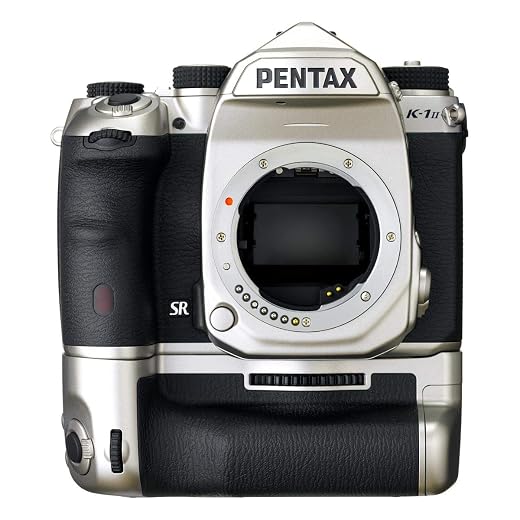
The K-1 II feels dense, purposeful, and more comfortable than its 1 kg weight suggests because the grip is deep and the controls are spaced for real hands. It is a body for photographers who change settings often and prefer buttons and dials to a touch-led interface.
The first thing many people notice is the grip. It is deep enough for a secure hold with a heavy 24–70mm or 70–200mm K-mount choice, and the shutter release falls naturally under the index finger. The top-plate control dial is distinctly Pentax: it can be assigned to ISO, exposure compensation, crop mode, bracketing, or other quick adjustments. That sounds minor until you are standing in rain, light is changing, and you want to change ISO without breaking concentration.
The 3.2-inch cross-tilt screen is another genuinely useful Pentax idea. It tilts up, down, and sideways while staying centered behind the body. For low landscape compositions, tripod work, and vertical framing, it is more useful than a fixed display. It does not turn forward for self-recording, and it does not have the fluid touch experience people expect from newer cameras. Still, for photography it solves the problems it was designed to solve.
The 100% pentaprism viewfinder remains a pleasure. It is bright, spacious, and immediate. There is no delay, no battery-anxious display, and no simulation taking over your view of a scene. For deliberate landscape or portrait work, that direct connection is a meaningful reason to use a DSLR.
How good are image quality and high ISO performance?
The Pentax K-1 Mark II produces excellent 36.4MP images with impressive dynamic range, detailed texture, and appealing color. Its best work appears at low to moderate ISO, but the Accelerator Unit makes higher sensitivity more usable than on the original K-1; treat ISO 819,200 as an emergency setting rather than a target.
At ISO 100, the AA-filter-free sensor is superb for landscape photography. Fine foliage, masonry, textiles, and distant mountain layers retain a level of detail that makes large prints rewarding. There is enough resolution for meaningful crops without turning every file into an editing burden. The camera’s Pixel Shift mode can push static scenes further still, capturing multiple sensor positions and combining them for color detail and reduced false color.
For real-world handheld work, ISO 6400 and 12,800 are reasonable places to work when exposure is careful. A portrait in window light, a street scene after dark, or an indoor event can hold up very well in RAW after sensible noise reduction. Above that point, the question becomes output size and subject matter. Grain in a documentary image can look honest; smeared detail in foliage or fabric does not. The expanded top sensitivity is useful insurance, not proof that darkness has stopped mattering.
Pentax JPEG output deserves mention. The color is often rich without looking cartoonish, and the Custom Image modes make quick personal work enjoyable. RAW files offer plenty of flexibility, particularly for skies and shadow recovery. For product photography and portraits, the 36-megapixel output gives room for precise retouching and cropping.
Is the Pentax K-1 Mark II particularly well-suited for landscapes and astrophotography?
It is excellent for landscapes and unusually capable for astrophotography. The combination of 36.4MP resolution, five-axis stabilization, Pixel Shift, weather sealing, GPS, and Astrotracer gives it tools that few full-frame DSLRs combine in one body.
For tripod-based landscapes, Pixel Shift Resolution System II is one of the K-1 II’s signature strengths. At f/8 to f/11 with a still subject, stable support, and no moving leaves or water, it can produce extraordinary detail and color information. It is not magic: wind, people, waves, or shifting shadows can create artifacts. But in the right conditions—architecture at dawn, a quiet forest interior, product setups, or a distant mountain view—it turns an already strong sensor into something special.
Dynamic Pixel Shift is the more flexible version. It allows handheld high-resolution capture, using movement data and multiple frames. Results depend on how steady you are and how much moves in the scene, but it can add useful detail to city scenes and travel photographs where a tripod would be unwelcome or impossible.
Astrotracer is the feature that gives the K-1 II a distinctive night-sky identity. The built-in GPS, compass, and stabilization mechanism work together to follow the apparent movement of stars during a long exposure. With a suitable wide-angle K-mount lens, the K-1 II can reduce star trails without requiring an external tracking mount. It does not replace planning: you still need a dark location, sound exposure judgment, and stable support. But it makes astrophotography more approachable and can reduce the equipment required for a successful session.
Is autofocus fast enough for portraits, weddings, and action?
The SAFOX 12 autofocus system is reliable for portraits, landscapes, events, and many wedding situations, especially when you place an AF point deliberately. It is not competitive with current high-end mirrorless cameras for erratic action, wide-area face tracking, or small wildlife moving rapidly across the frame.
The 33-point phase-detect system has 25 cross-type points and focuses down to about –3 EV. In a dim reception room, it can find focus surprisingly well with a quick K-mount option, provided there is enough contrast and you work thoughtfully. For posed portraits, first dances, speeches, and documentary scenes, it is dependable. I would use single-point or selected-area techniques rather than expecting the camera to identify the most important face in a complicated crowd.
The K-1 II shoots at 4.4 fps in full-frame mode. That is enough for a sequence of laughter, a gesture during a ceremony, or a short burst when a landscape suddenly gains a moving subject. It is not enough to make sports or birds-in-flight a comfortable main use. In APS-C crop mode, the rate rises to about 6.4 fps, and the angle of view becomes tighter, which can help with occasional wildlife. Even then, the tracking behavior and buffer make the camera a patient photographer’s action tool.
For portrait photography with the Pentax K-1 Mark II, the pace is a strength. Select a point over the eye, use the body’s stabilization to keep shutter speeds sensible, and concentrate on expression. For weddings, it can deliver beautiful files, but it is best suited to an experienced shooter who anticipates moments and carries a backup body.
How useful are SR II and Pixel Shift in everyday photography?
The five-axis SR II system is one of the biggest practical advantages of the K-1 Mark II, because it stabilizes nearly any compatible full-frame K-mount choice. Pixel Shift is exceptional for static subjects; SR II is useful every day, whether you are shooting a museum interior, a twilight street, or a handheld portrait.
Pentax rates SR II at roughly five stops. Ratings never replace judgment, but in ordinary use it genuinely expands what can be photographed hand-held. With a 43mm or 77mm Limited-series choice, you can work at shutter speeds that would otherwise be risky, keeping ISO lower and preserving fine detail. It helps composition too: the stabilized view makes precise framing easier at longer focal lengths.
The system also supports composition adjustment and horizon correction. These are not headline features, but they are useful when your tripod position is constrained or your horizon needs a small correction. For a landscape shooter, that flexibility can save time and avoid a need to crop away hard-earned pixels.
Pixel Shift is best treated as a specialist setting, not a default. Use it for a still product, a quiet architectural scene, carefully arranged food, or a landscape with little wind. Dynamic mode broadens the opportunity, but it cannot erase moving foliage, blinking lights, or a subject shifting their weight. Knowing when not to use the mode is part of using it well.
Is the Pentax K-1 Mark II suitable for video?
The K-1 Mark II is capable of attractive Full HD footage, but it is not a strong video-first camera. It has no 4K, modest continuous-focus behavior, and a body designed around stills; buy it for video only when video is a secondary part of a photography-focused workflow.
It records 1080p at up to 60i and offers a microphone input, focus peaking, interval shooting, and time-lapse options. Those tools are sufficient for a static interview, a travel cutaway, a behind-the-scenes clip, or a controlled creative project. The color and detail can look excellent with careful exposure.
The limitation is speed and confidence. For handheld walking footage, rapidly changing subjects, or client work that expects 4K delivery, a newer hybrid system makes more sense. The K-1 II is happiest when you lock the camera down, set focus deliberately, and treat motion capture with the same patience it asks of still photography.
How rugged is the K-1 Mark II for travel and outdoor use?
The weather-sealed magnesium-alloy body is one of the K-1 II’s strongest selling points. It is designed for dust, moisture, and cold down to –10°C, making it an excellent companion for wet landscapes, winter travel, and outdoor projects when paired with weather-resistant K-mount choices.
This is not a delicate full-frame body. The grip, seals, and substantial construction make it reassuring when the forecast is bad and the scene is still usable. That said, weather resistance is not permission to ignore care. Dry the body after salt spray, protect the mount during changes, and carry a cover during sustained rain.
For travel photography, the main compromise is weight. At around 1,010g with battery and card, the K-1 II is not a casual carry-on body. But it earns its space if your trip is built around photography. A 28–105mm WR model makes a sensible travel pairing; a 31mm or 43mm Limited-series choice gives the camera a more discreet side for walking cities.
What are battery life, cards, and connectivity like?
Battery life is good for a full-frame DSLR, with an official rating of around 670 shots and often more when you use the viewfinder heavily. Dual UHS-I SD-card slots, Wi-Fi, built-in GPS, and in-camera geotagging make the K-1 II well prepared for careful travel or client workflow, though its wireless experience feels older than a modern phone-centered system.
Carry a second D-LI90 battery for a full event day, night shooting with GPS, or cold conditions. GPS and the rear display consume power, and Astrotracer sessions deserve a fresh battery. The dual slots are especially welcome for weddings and paid work: set one for backup, overflow, or separate JPEG and RAW capture according to your workflow.
Wi-Fi supports image transfer to a phone and remote shooting, but think of it as useful convenience rather than a reliable publishing pipeline. A card reader and laptop transfer remain the better solution for large 36MP RAW files. For a photographer who values backup and deliberate editing, that is not a hardship.
Pentax K-1 Mark II vs. original K-1: what has actually changed?
The K-1 Mark II keeps the original K-1’s 36.4MP sensor, body design, SR II stabilization, GPS, and general character. Its meaningful changes are the Accelerator Unit for improved high-ISO processing, Dynamic Pixel Shift for handheld use, and refined AF tracking behavior.
If you already own an original K-1 and mainly shoot at low ISO on a tripod, the difference may not justify changing bodies. The original remains an excellent landscape camera. If you frequently work in dim interiors, shoot handheld, or want the expanded Pixel Shift behavior, the Mark II is the more capable version.
For a new buyer, choose based on condition and price. A clean original K-1 at a large discount may be the smarter value; a Mark II at a reasonable premium is the better long-term choice because its improvements target exactly the situations where the original design felt most limited.
Pentax K-1 Mark II vs Nikon D850 for landscapes
For pure high-resolution landscape output, the Nikon D850 has more resolution, faster performance, and a broader current ecosystem. The K-1 Mark II counters with in-body stabilization, Pixel Shift, Astrotracer, weather-ready construction, and a much more accessible used price.
The D850 is the better all-round professional body for someone who also shoots fast wildlife, busy weddings, and demanding commercial work. The K-1 II is the more distinctive landscape tool for a photographer who values stabilized K-mount choices, long exposures, night sky work, and a slower, more personal workflow. Neither makes the other irrelevant; they serve different priorities.
Pentax K-1 Mark II vs. Canon 5D Mark IV for weddings and events
The Canon 5D Mark IV is generally the safer event choice for photographers needing more familiar service support, stronger Live View behavior, and a deeper pool of working professionals around the system. The K-1 II can produce more detailed files and offers in-body stabilization, but its autofocus pace and 4.4 fps burst ask for better anticipation.
For a wedding photographer already committed to Pentax, the K-1 II can make beautiful work in the hands of someone who understands its strengths. Use selected AF points, carry a backup, rely on fast prime units in dark rooms, and do not treat it like a high-speed news body. For a photographer starting from zero with weddings as the main income stream, the Canon route is easier to recommend.
Pentax K-1 Mark II vs. Sony A7 III for travel and hybrid use
The Sony A7 III is lighter, faster at subject tracking, more capable for video, and easier for rapid phone-first sharing. The K-1 II provides a more substantial grip, a clearer direct viewfinder experience, in-body stabilization with a wider range of older K-mount choices, and a more tactile stills workflow.
For travel where every kilogram matters and video is important, the A7 III wins. For a photography-centered trip involving rain, cold, landscapes, and careful files, the K-1 II remains more emotionally engaging. It is not about old versus new; it is about speed and portability versus a slower, rugged photographic process.
Should you choose the K-1 Mark II over mirrorless?
Choose the K-1 Mark II over mirrorless if you value a pentaprism finder, physical controls, full-frame Pixel Shift, Astrotracer, weather resistance, and K-mount continuity more than compact size, 4K, advanced video autofocus, and automated subject detection. Mirrorless is the better platform for fast action and modern hybrid production; the Pentax remains a superb stills machine.
The word “future-proof” is not helpful here. No camera is future-proof. The better question is whether the K-1 II’s current strengths match your next three years of projects. If those projects are landscapes, architecture, portraits, macro, travel, and night skies, their value is real. If they are sports reels, fast wildlife, and daily social-video delivery, buy something else.
Who should buy or skip the Pentax K-1 Mark II?
Buy the K-1 Mark II if you are a landscape photographer, enthusiast portrait shooter, outdoor traveler, night-sky photographer, macro specialist, or K-mount owner seeking a full-frame body with distinctive capabilities. It is also a strong used value for patient photographers who want professional construction without paying flagship money.
Skip it if you need the best autofocus for birds in flight, fast sports, unpredictable toddlers, or crowded wedding dance floors. Skip it if 4K video, a forward-facing screen, lightweight carry, and rapid wireless delivery are non-negotiable. The K-1 II is rewarding precisely because it is specific; do not buy it hoping it will behave like a current video-centered mirrorless body.
FAQs: is the Pentax K-1 Mark II right for you?
Is the Pentax K-1 Mark II still worth buying?
Yes, the Pentax K-1 Mark II is still worth buying for high-resolution still photography, landscapes, astro, portraits, and weather-resistant outdoor work. Its weaknesses are speed, video, and weight rather than image quality.
What is the main difference between K-1 and K-1 Mark II?
The Mark II adds an Accelerator Unit for better high-ISO processing, Dynamic Pixel Shift for handheld work, and improved AF tracking. The sensor resolution and core body design are essentially shared.
Is the Pentax K-1 Mark II particularly well-suited for landscapes and astrophotography?
It is excellent for both. Pixel Shift, five-axis stabilization, weather sealing, GPS, and Astrotracer make it one of the most distinctive full-frame DSLRs for these subjects.
Is the K-1 Mark II good for portraits and weddings?
It is very good for portraits and capable of handling weddings in skilled hands. Its autofocus and burst rate are less reassuring than newer systems when action becomes erratic or light becomes difficult.
Does the Pentax K-1 Mark II have 4K video?
No. It records Full HD video and provides a microphone input and focus peaking, but it is not a 4K hybrid camera.
How effective is high ISO on the K-1 Mark II?
ISO 6400 and 12,800 are usable with decent exposure and sensible processing. The ISO 819,200 setting is an emergency option, not a setting for maximum detail.
Does the K-1 Mark II have in-body stabilization and weather sealing?
Yes. It has five-axis SR II stabilization and a weather-sealed magnesium-alloy body intended for dust, moisture, and cold conditions.
What is real-world battery life like?
A charge can cover a long personal shoot and often exceeds the roughly 670-shot rating when viewfinder use dominates. Carry a spare for GPS, cold weather, Astrotracer, or all-day event work.
What full-frame K-mount choices suit the K-1 Mark II best?
The 24–70mm f/2.8 is the all-purpose professional choice; the 15–30mm f/2.8 suits landscapes and astro; the 85mm f/1.4 excels at portraits; and the 28–105mm is a sensible weather-resistant travel model.

Final verdict
The Pentax K-1 Mark II is not the fastest, smallest, or most video-ready full-frame camera you can buy. What it is remains compelling: a weather-ready 36.4MP DSLR with five-axis stabilization, Pixel Shift, Astrotracer, a thoughtful control layout, and image quality that rewards patient photography.
For landscapes, portraits, architecture, macro, travel, and night work, it is still a real recommendation, not a nostalgia pick. Buy it because its particular tools suit your way of seeing, and it can turn a modest K-mount kit into a deeply capable system.


